


How to Encourage Pet Relaxation Naturally at Home
Finding the perfect balance between your pet’s comfort and your Dubai apartment’s style can feel challenging, especially when every detail matters for daily living. Understanding your pet’s unique needs is the foundation for a truly relaxing environment, from thermal comfort in the Dubai heat to dedicated cozy zones that blend with your décor. This guide will help you spot the subtle signs your pet shows, choose calming essentials, and create a harmonious space where both style and relaxation thrive.
Table of Contents
- Step 1: Assess Your Pet’s Comfort Needs
- Step 2: Select Calming And Stylish Essentials
- Step 3: Create A Peaceful Relaxation Zone
- Step 4: Introduce Relaxation Routines
- Step 5: Monitor Pet Relaxation And Adjust
Quick Summary
| Key Point | Explanation |
|---|---|
| 1. Assess Your Pet’s Comfort Needs | Understanding your pet’s unique requirements is crucial for creating a relaxing environment that suits them. |
| 2. Choose Functional and Stylish Products | Select calming items that cater to your pet’s needs while seamlessly matching your home’s decor. |
| 3. Create a Dedicated Relaxation Zone | Designate a specific area in your home where your pet feels safe and can unwind without disruptions. |
| 4. Implement Relaxation Routines | Establish consistent practices to help your pet learn to relax on cue amidst various distractions. |
| 5. Monitor and Adjust as Needed | Regularly observe your pet’s behavior to fine-tune your approach, ensuring continuous progress in their relaxation training. |
Step 1: Assess your pet’s comfort needs
Your pet’s relaxation starts with understanding what they actually need. Every animal has unique comfort requirements based on their age, breed, health, and personality. This step helps you identify gaps in your current setup before making changes.
Begin by observing your pet’s behavior throughout the day. Notice where they naturally gravitate, what surfaces they prefer, and how they spend their time. Do they seek out cool tile floors in summer or burrow into soft blankets in winter? These clues reveal what your pet’s body is telling you.
Consider these key comfort factors:
- Sleep environment: Does your pet have a dedicated space away from household traffic and noise?
- Temperature control: Can they move between warmer and cooler areas as needed?
- Safe retreat spots: Do they have places where they can escape when feeling stressed or overstimulated?
- Exercise opportunities: Are they getting appropriate physical activity for their age and breed?
- Mental stimulation: Does your pet engage in species-appropriate activities that satisfy their natural instincts?
Your pet’s comfort needs also depend on basic physiological requirements like nutritious food, fresh water, and clean accommodations. Beyond these essentials, assess whether they have consistent daily routines and opportunities to control their interactions with their environment.
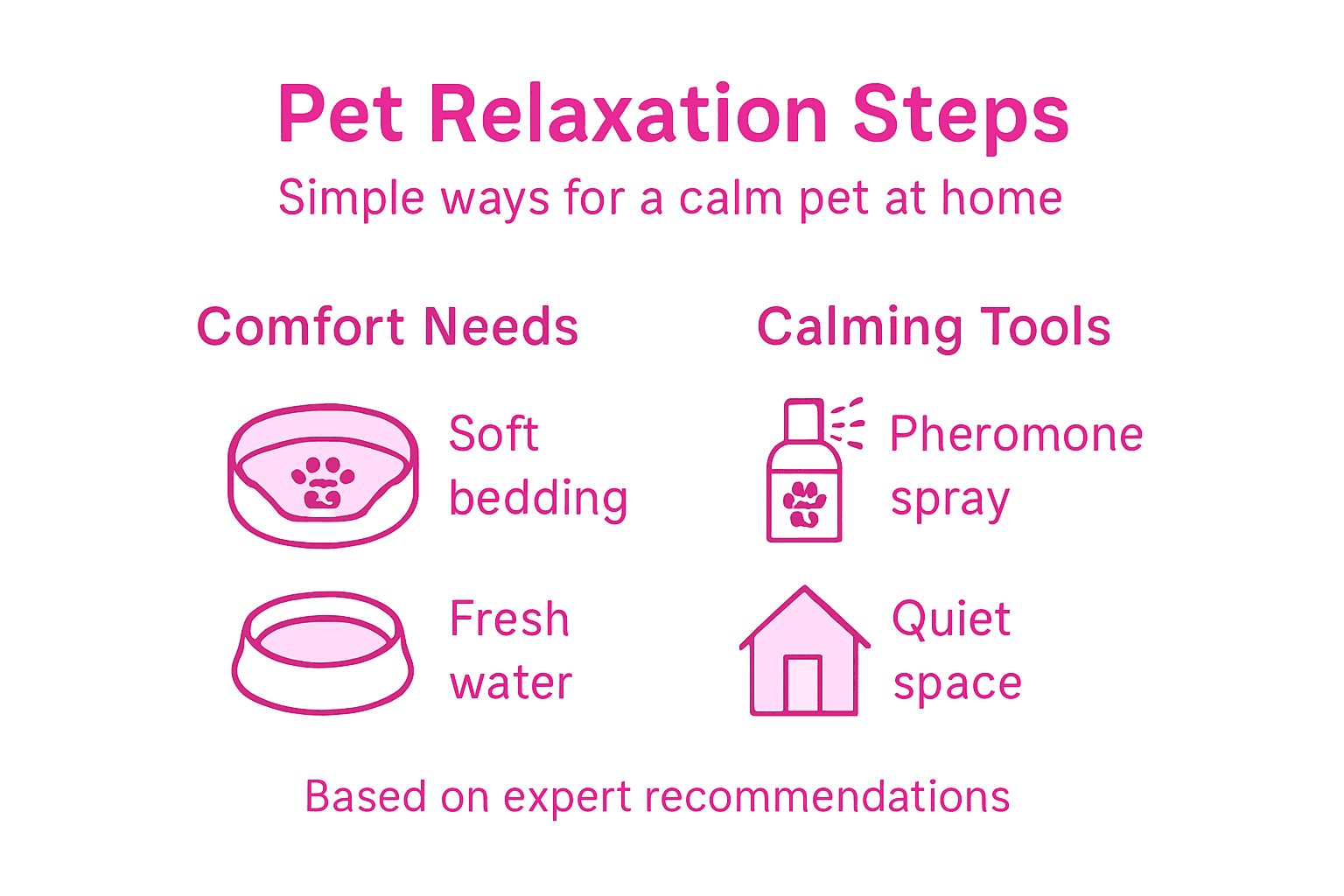
In Dubai’s warm climate, thermal comfort becomes especially important. Urban apartments can get quite warm, and your pet needs access to shaded, well-ventilated areas. Consider how humidity affects your specific pet, too.
Take time to document what you notice. Write down where your pet rests most, what seems to trigger stress or excitement, and what activities engage them. This information guides everything you’ll do next.
Here’s a summary of key pet comfort considerations unique to urban Dubai apartments:
| Factor | Importance in Dubai | Owner Action |
|---|---|---|
| Thermal comfort | High due to heat and humidity | Provide cool, ventilated spaces |
| Noise reduction | Urban areas often noisy | Designate quiet retreat zones |
| Safe access | Apartment layouts may restrict movement | Ensure easy access to comfort areas |
| Light exposure | Harsh sunlight can stress pets | Place zones away from direct sun |
Understanding your pet’s individual needs is the foundation for creating a truly relaxing home environment tailored specifically to them.
Don’t skip this assessment stage. Many pet owners jump straight to buying products without understanding what their pet actually needs, leading to wasted money and unused items.
Pro tip: Spend a full week simply observing your pet without making changes, noting their natural preferences and behavior patterns during different times of day and seasons.
Step 2: Select calming and stylish essentials
Now that you understand your pet’s comfort needs, it’s time to choose products that support relaxation while fitting seamlessly into your home’s aesthetic. The right essentials combine functionality with style, so your space remains beautiful while your pet feels calm.
Start by identifying which calming solutions match your pet’s specific needs. Calming treats use ingredients like melatonin, chamomile, and valerian root to reduce anxiety naturally. Pheromone diffusers and sprays mimic natural comforting scents that soothe pets without medication. If your pet responds better to tactile comfort, calming collars or specially designed pet furniture provide consistent support throughout the day.
Consider these product categories for your Dubai home:
- Calming treats and supplements: Easy to incorporate into daily routines and often available in natural formulations
- Pheromone diffusers: Create a calming atmosphere for your entire space without visual clutter
- Specialized pet furniture: Designed to provide security while complementing modern interiors
- Textured bedding and blankets: Offer tactile comfort and add warmth during cooler evenings
- Natural aromatherapy products: Support relaxation through gentle, pet-safe scents
Nearly 59% of dog owners and over 52% of cat owners now use calming products, reflecting growing recognition of their benefits. This means you’ll find quality options designed specifically for pet relaxation.
When selecting essentials, prioritize your pet’s specific triggers and preferences from your earlier observation. Does your pet respond better to physical comfort or behavioral support? Does texture matter to them? Match the product to the problem you identified.
Style matters in your urban apartment. Look for calming pet furniture that creates secure spaces while maintaining your interior design. Neutral colors, clean lines, and quality materials ensure your pet’s comfort zone enhances rather than detracts from your living space.
To help you select pet relaxation products, here’s a comparison of popular calming essentials:
| Product Type | Primary Benefit | Ideal For |
|---|---|---|
| Calming treats | Reduces anxiety naturally | Pets sensitive to stress triggers |
| Pheromone diffusers | Calms environment scent-wise | Multi-pet households |
| Specialty furniture | Security and comfort | Pets needing tactile reassurance |
| Aromatherapy | Soothes via gentle scents | Sensitive or nervous pets |
The best calming essentials are ones your pet actually uses and that fit naturally into your home environment.
Avoid buying products based solely on aesthetics. Your pet won’t relax in something that doesn’t feel right to them, no matter how beautiful it looks.
Pro tip: Start with one or two core calming products and observe your pet’s response for at least two weeks before adding additional items.
Step 3: Create a peaceful relaxation zone
Designating a specific area in your home as your pet’s relaxation zone teaches them where it’s safe to unwind. This dedicated space becomes their refuge from household activity and a place where calm behavior is reinforced and rewarded.
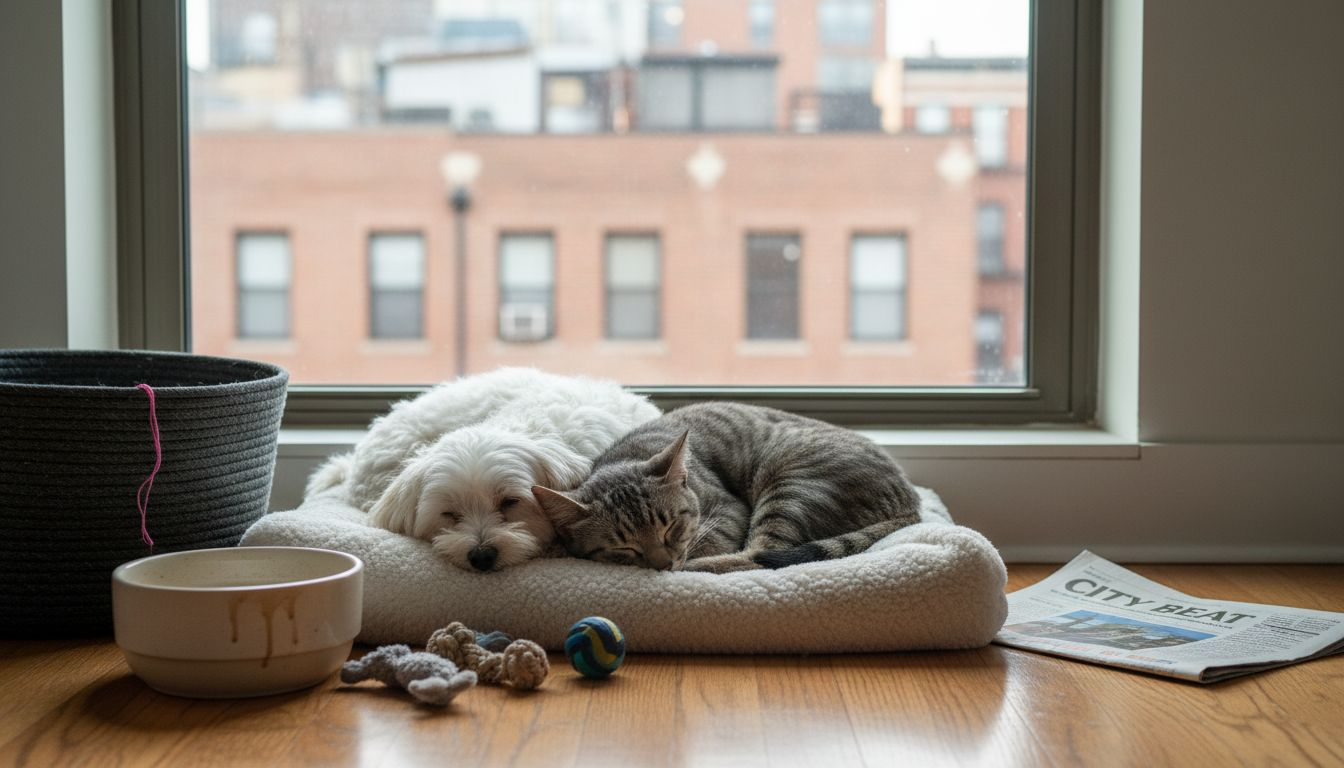
Choose a location that naturally feels quiet and away from high-traffic areas. In a Dubai apartment, this might be a corner of your bedroom, a quiet section of your living room, or an interior space away from windows and doors. The spot should feel secure to your pet, ideally with some subtle barrier or boundary that signals this area is theirs.
Set up your zone with these essential elements:
- Comfortable bedding or mat: Provide a soft surface that invites settling in and relaxing
- Minimal visual clutter: Keep the space simple and uncluttered to reduce sensory overload
- Reduced noise levels: Position away from speakers, televisions, and household activity
- Safe access: Ensure your pet can reach the zone easily without navigating through stressful areas
- Consistent placement: Keep the zone in the same location so your pet learns to associate it with calmness
Consistency matters tremendously. Your pet learns to associate the relaxation zone with calm through repeated, positive experiences. Providing a quiet and comfortable space where pets feel safe helps support their mental well-being.
Introduce relaxation gradually. Start by placing your pet’s favorite calming treats or toys in the zone without forcing them to stay there. Reward any voluntary time spent in the space with praise and high-value treats. Over time, your pet learns the zone means good things happen.
During the first week or two, simply observe your pet using the space naturally. Don’t interrupt them or call them away unexpectedly. This teaches them the zone is genuinely theirs for rest.
A truly effective relaxation zone becomes a place your pet chooses to go, not somewhere they feel confined.
Your apartment’s layout influences zone placement. Consider traffic patterns, temperature variations (especially important in Dubai heat), and access to natural light. Avoid placing the zone near air conditioning vents or in areas that get too warm.
Pro tip: Train a simple cue like “relax” or “zone” by marking and rewarding your pet every time they naturally go to the area, gradually building positive association with the command.
Step 4: Introduce relaxation routines
Regular relaxation routines teach your pet to calm themselves on cue and maintain that composure even when distractions arise. Consistency is key—these daily practices build a habit of relaxation that becomes second nature to your pet.
Start with short, focused sessions of about five to ten minutes. Choose a calm time when your pet is already somewhat relaxed and you’re not rushed. Morning or early evening often works well in Dubai when temperatures are more moderate.
Begin with these foundational steps:
- Choose a simple cue: Use a word like “relax,” “calm,” or “settle” consistently
- Practice in the relaxation zone: Start sessions in the peaceful space you created
- Guide basic behaviors: Ask your pet to sit or lie down using familiar commands
- Reward immediately: Use high-value treats your pet loves most
- Increase duration gradually: Extend the session length by a few seconds each week
Relaxation routines involve daily practice sessions using commands like sit and stay while gradually introducing distractions. This progressive approach helps your pet learn to stay calm even when things become busier around them.
After your pet masters the basics in their quiet zone, introduce minor distractions. Turn on soft music, move slightly around them, or have another person walk nearby. Keep changes small so your pet doesn’t become overwhelmed.
Timing matters more than duration. Three ten-minute sessions spread throughout your day work better than one long session. Morning practice sets a calm tone for the day, while evening sessions help wind your pet down before bedtime.
Expect progress to take weeks, not days. Your pet learns through repetition and positive association. Some pets grasp relaxation commands within two weeks; others need a month or more. Watch for signs your pet is actually relaxed—soft eyes, slower breathing, loose posture.
The goal isn’t forcing your pet to stay still, but teaching them that calmness brings rewards and feels good.
Stay patient if your pet regresses. Stress, schedule changes, or household disruptions can temporarily affect progress. Simply return to shorter sessions and rebuild from there.
Pro tip: Keep training treats small and low-calorie so you can reward frequently without overfeeding, and always end sessions on a positive note even if progress feels slow.
Step 5: Monitor pet relaxation and adjust
Observing how your pet responds to relaxation training reveals what’s working and what needs adjustment. This ongoing assessment ensures your efforts stay effective and your pet continues making progress toward genuine calm.
Watch for these physical signs that indicate real relaxation in your pet:
- Soft, relaxed facial expression: Eyes may be half-closed or blinking slowly
- Loose body posture: Muscles appear relaxed rather than tense or braced
- Slow, steady breathing: Breathing becomes deeper and more rhythmic
- Settled position: Your pet stays in place without fidgeting or shifting weight constantly
- Responsive but calm: Your pet notices you but doesn’t jump up excitedly
If your pet isn’t showing these signs after two weeks of consistent practice, something needs adjusting. Monitoring involves assessing behavioral and health markers in pets to identify stress or discomfort. Start by evaluating your current approach honestly.
Common adjustments include changing your reward type if your pet loses interest in their favorite treats. Some pets bore easily, so rotating between two or three treat options keeps them motivated. You might also adjust the environment by reducing distractions further or practicing at different times of day.
If your pet remains overstimulated or anxious, consider extending your relaxation zone setup. Your pet may need more physical separation from household activity or better temperature control. In Dubai apartments, heat stress can prevent genuine relaxation, so ensure your zone stays cool.
Reassess your expectations too. Anxious or high-energy pets may need longer timelines than naturally calm animals. One month might be realistic for one dog while another needs three months of consistent practice.
Progress isn’t always linear. Small setbacks are normal and don’t mean your training has failed.
Document what you notice. Keep brief notes about your pet’s behavior during and after sessions. Over weeks, patterns emerge showing what triggers relaxation and what causes stress. This information guides your adjustments.
If your pet shows no improvement after four weeks of daily practice and environmental adjustments, consult your veterinarian. Underlying anxiety, pain, or health issues may require professional intervention alongside your relaxation program.
Pro tip: Video record your pet during relaxation sessions weekly to notice subtle progress you might miss in the moment, especially improvements in body posture and breathing patterns.
Transform Your Home into a Sanctuary for Your Pet’s Natural Relaxation
Creating a peaceful environment for your pet requires more than just products it involves a thoughtful combination of comfort safety and style tailored to your pet’s unique needs. The article highlights the importance of understanding your pet’s behavior establishing a calm zone and using calming essentials. If you want to support your pet’s relaxation journey with modern and cozy solutions that blend beautifully into your home consider exploring our Rest & Retreat – Teddy Pet collection.

Find calming beds mats and accessories designed to help your pet feel safe and relaxed while complementing your interior. Designed with both pets and their owners in mind Teddy Pet makes it easier to create that dedicated peaceful space every pet desires. Take the first step today to enhance your pet’s comfort and make everyday life more serene. Visit Teddy Pet to discover thoughtful essentials crafted for natural pet relaxation that suits your home perfectly.
Frequently Asked Questions
How can I assess my pet’s comfort needs at home?
Start by observing your pet’s behavior and identifying where they prefer to rest and relax. Take notes on their habits, such as where they seek cool surfaces or cozy blankets, and pay attention to their body language to understand their comfort requirements.
What calming products can I incorporate into my home for my pet?
Look for calming treats, pheromone diffusers, or specialized furniture that promotes relaxation. Choose products based on your pet’s specific needs, and introduce one or two at first to gauge their effect over a couple of weeks.
How do I create a designated relaxation zone for my pet?
Choose a quiet, low-traffic area in your home and set it up with comfortable bedding or a mat. Keep the space minimal and free from distractions, allowing your pet to associate it with calmness and relaxation.
How can I introduce relaxation routines for my pet?
Start with short sessions using a cue word like “relax” within your pet’s designated relaxation zone. Reward your pet after they demonstrate calm behavior and gradually increase the duration of these sessions over time.
What signs indicate that my pet is relaxing properly?
Look for signs like a relaxed facial expression, loose body posture, and steady breathing. Monitor these behaviors during relaxation sessions, noting improvements over time to ensure your training is effective.
When should I consider consulting a veterinarian about my pet’s relaxation issues?
If your pet shows no progress after four weeks of consistent practice and adjustments, it may be time to consult a veterinarian. They can help identify any underlying health issues that may be affecting your pet’s ability to relax.
Recommended


