


Pet Wellness at Home: Enhancing Urban Pet Comfort
Finding the perfect balance between style and practical wellness for your dog can be challenging in a vibrant city like Dubai. Urban living comes with unique demands, requiring pet owners to rethink how home comfort and health integrate into daily routines. With research showing the human-animal bond directly shapes owner physical activity and pet wellbeing, today’s modern solutions blend smart design, technology, and holistic care to create spaces where both pets and owners thrive.
Table of Contents
- Defining Pet Wellness At Home Today
- Key Practices For At-Home Pet Health
- Stylish Pet Essentials For Modern Homes
- Common Mistakes Hindering Pet Wellness
- Creating A Safe And Cozy Home Environment
Key Takeaways
| Point | Details |
|---|---|
| Holistic Pet Wellness | Modern pet wellness encompasses physical, emotional, and nutritional aspects, viewing pets as integral family members. |
| Importance of Environment | Home environments significantly impact pet health, requiring tailored strategies for urban living. |
| Preventative Health Practices | Regular veterinary check-ups and technology-driven monitoring are essential for proactive pet health management. |
| Stylish Pet Essentials | Pet products should blend functionality with modern design to enhance home aesthetics while meeting pets’ needs. |
Defining Pet Wellness at Home Today
Pet wellness today represents a holistic approach to supporting companion animals’ physical, mental, and emotional health within urban home environments. Far beyond basic care, modern pet wellness integrates comprehensive strategies that recognize pets as integral family members with complex health needs.
Research highlights the intricate dynamics of the human-animal bond, demonstrating that pet wellness is increasingly viewed as a dynamic, interconnected system. Emerging health research indicates pets significantly influence owner lifestyles, particularly through physical activity engagement and emotional connection.
Key components of contemporary pet wellness include:
- Integrated healthcare approaches that consider physical, nutritional, and psychological factors
- Environmental enrichment tailored to urban living spaces
- Preventative monitoring using technology and regular veterinary check-ups
- Mental stimulation through interactive experiences and structured play
The modern understanding of pet wellness recognizes that home environments play a crucial role in animal health. Advanced care toolkits now emphasize personalized strategies that adapt to individual pet needs, family dynamics, and living conditions.
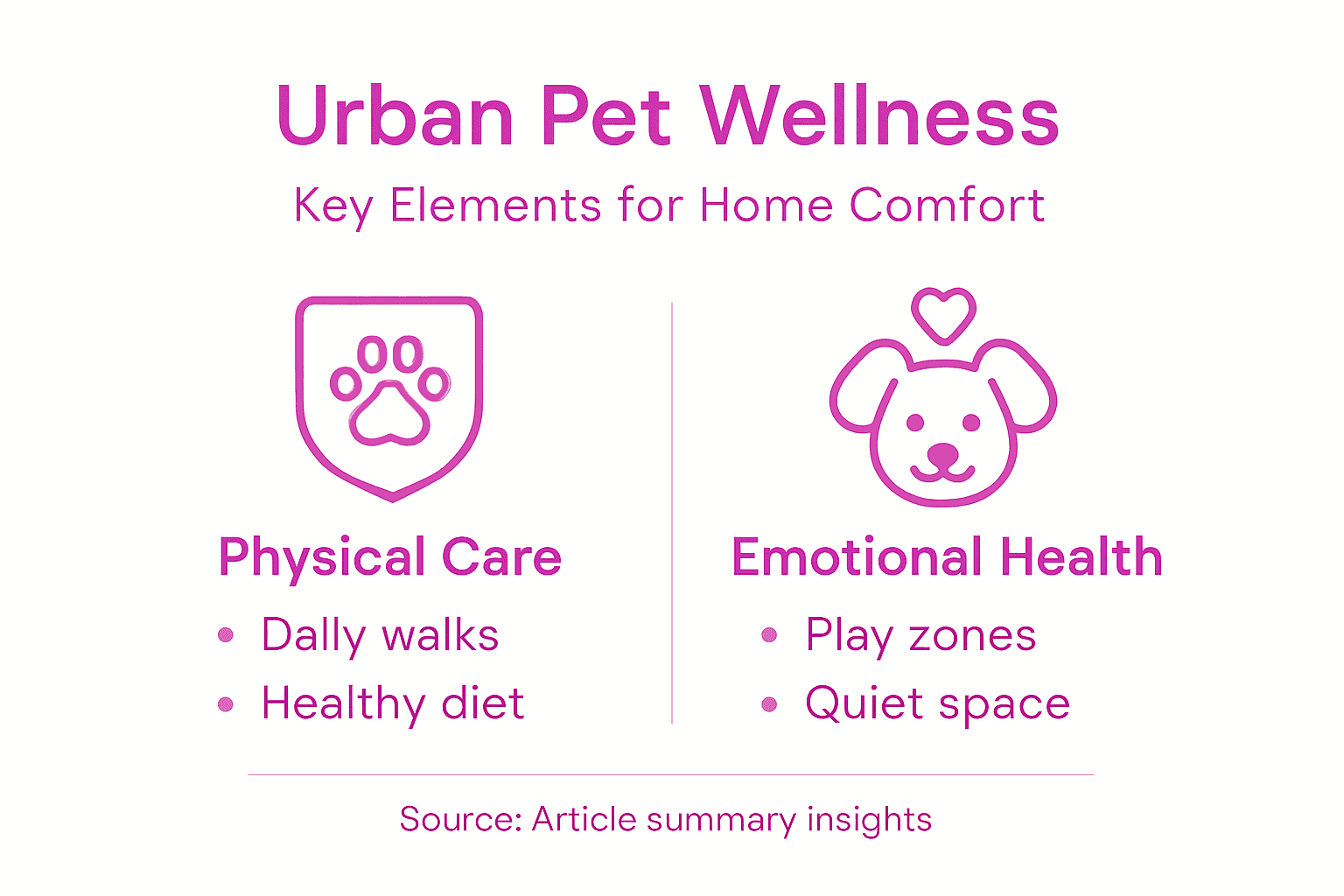
Physical wellness encompasses nutrition, exercise, and medical care, while emotional wellness involves mental stimulation, social interaction, and stress management. Urban pet owners must create environments that balance these complex requirements.
Here’s a quick overview of how physical and emotional wellness contribute to overall pet health:
| Wellness Type | Key Benefits | Examples in Urban Homes |
|---|---|---|
| Physical Wellness | Prevents disease, ensures vitality | Balanced diet, daily exercise routines |
| Emotional Wellness | Reduces stress, improves behavior | Interactive play, safe quiet zones |
Pro tip: Design a dedicated wellness zone in your home that provides your pet with comfortable resting areas, stimulating toys, and easy access to fresh water and nutrition.
Key Practices for At-Home Pet Health
Pet health management in urban homes requires a comprehensive, proactive approach that integrates technology, routine care, and personalized attention. Modern pet owners must develop strategic practices that address both physical and emotional wellness, creating holistic environments that support their companion animals’ overall well-being.
Advanced monitoring technologies are transforming at-home pet care, enabling pet owners to track health indicators and respond quickly to potential issues. These innovative solutions provide real-time insights into pet activity, nutrition, and potential health concerns, empowering owners to make informed decisions.
Key practices for maintaining optimal pet health include:
- Regular veterinary check-ups to establish baseline health metrics
- Nutritional monitoring with balanced, age-appropriate diets
- Daily physical exercise tailored to pet’s breed and energy levels
- Mental stimulation through interactive toys and engagement
- Environmental enrichment that reduces stress and promotes well-being
Collaborative care strategies emphasize the importance of involving all household members in pet wellness. This approach ensures consistent care, early problem detection, and a supportive home environment that adapts to the pet’s changing needs.
Successful at-home pet health requires understanding individual pet requirements, leveraging technological tools, and maintaining consistent, attentive care. Urban pet owners must create flexible, responsive strategies that accommodate their pets’ unique physical and emotional landscapes.
Pro tip: Create a dedicated pet wellness journal to track daily activities, diet, exercise, and health observations, helping you identify patterns and potential health concerns early.
Stylish Pet Essentials for Modern Homes
Urban pet owners today seek more than basic functionality - they want pet essentials that seamlessly integrate with sophisticated home design, transforming traditional pet accessories into stylish statement pieces. The modern approach to pet care emphasizes aesthetics alongside practical utility, recognizing that pet products can enhance rather than detract from interior spaces.
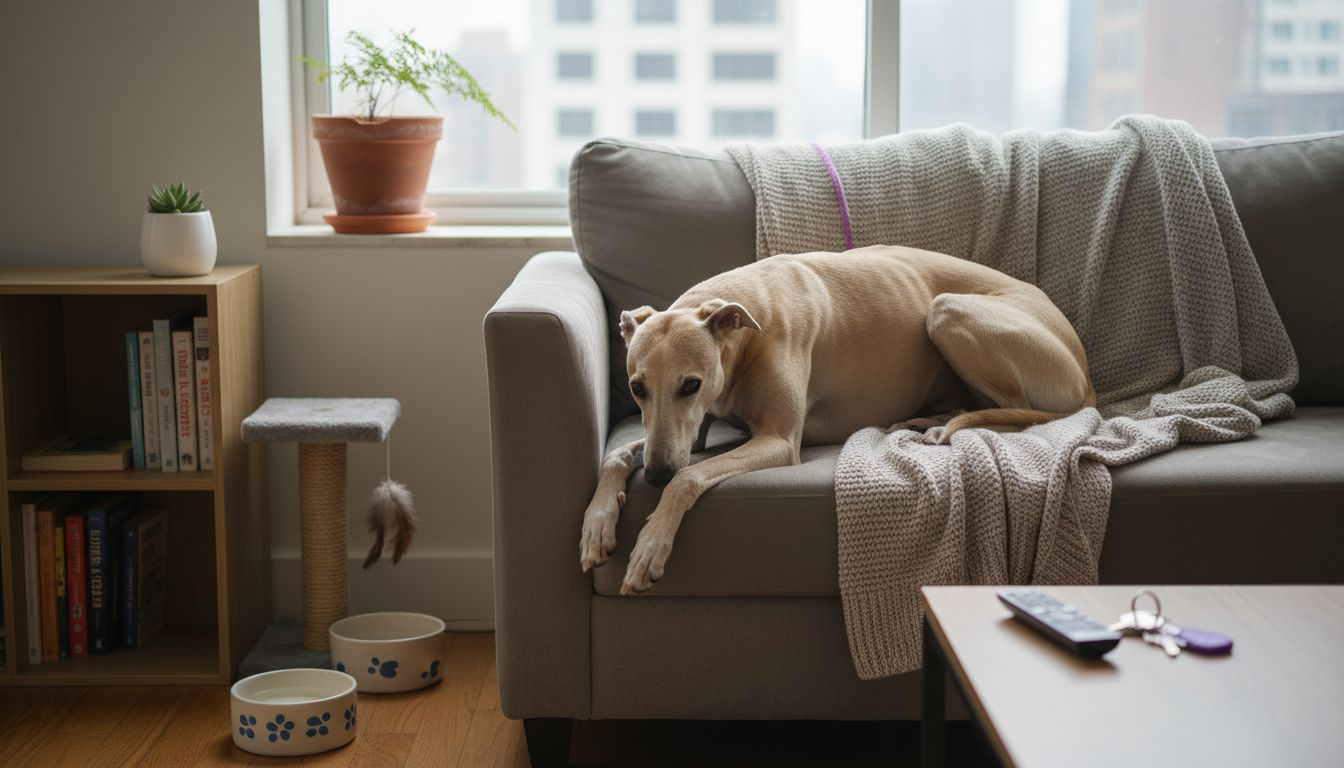
Innovative pet furniture design has revolutionized how we approach pet accessories, creating multipurpose solutions that serve both animal and human needs with elegance and intelligence. These contemporary designs reflect a sophisticated understanding of urban living dynamics.
Key characteristics of stylish pet essentials for modern homes include:
- Minimalist aesthetic with clean lines and neutral color palettes
- Multifunctional design that serves both pet and human spaces
- High-quality materials like sustainable wood, acrylic, and textile blends
- Ergonomic construction supporting pet comfort and movement
- Seamless integration with existing home decor
Modern pet essentials go beyond mere utility, becoming integral design elements that reflect an owner’s taste and lifestyle. Designers are increasingly creating pieces that function as furniture first, pet accessories second - with hidden litter boxes, camouflaged feeding stations, and beds that could easily be mistaken for contemporary art installations.
The intersection of design and functionality demands thoughtful selection, considering not just aesthetic appeal but also material durability, ease of cleaning, and adaptability to changing home environments. Urban pet owners must balance style, comfort, and practicality in their choices.
Pro tip: Invest in neutral-toned, multipurpose pet furniture that can easily transition between different interior design schemes, maximizing both style and long-term utility.
Common Mistakes Hindering Pet Wellness
Pet wellness is a delicate balance that many urban pet owners inadvertently disrupt through common yet preventable mistakes. Understanding these potential pitfalls is crucial for maintaining optimal health and happiness for companion animals in modern home environments.
Behavioral challenges significantly impact pet and owner wellness, creating complex dynamics that extend beyond simple care routines. Unaddressed behavioral issues can transform pet ownership from a joyful experience into a source of ongoing stress and frustration.
Most common mistakes undermining pet wellness include:
- Inconsistent nutrition with inappropriate or unbalanced diets
- Insufficient physical exercise not tailored to pet’s breed and age
- Neglecting mental stimulation leading to boredom and anxiety
- Irregular veterinary check-ups that miss early health warning signs
- Poor socialization preventing healthy interaction skills
Critical health errors can substantially reduce a pet’s quality of life and potentially shorten their lifespan. Urban pet owners must remain vigilant, proactively identifying and addressing potential wellness obstacles.
Each pet is unique, requiring personalized attention and a holistic approach that considers their individual physical, emotional, and environmental needs. Recognizing warning signs early and implementing targeted interventions can dramatically improve overall pet wellness.
Compare these common mistakes with their long-term impact on pet wellness:
| Mistake Type | Typical Consequence | Prevention Strategy |
|---|---|---|
| Poor Socialization | Increased anxiety, aggression | Early exposure, positive training |
| Inconsistent Nutrition | Malnutrition, digestive issues | Scheduled, balanced meals |
| Lack of Mental Stimulation | Destructive behavior, boredom | Rotate toys, regular engagement |
Pro tip: Create a comprehensive pet wellness checklist that tracks nutrition, exercise, medical history, and behavioral patterns to identify potential issues before they become significant problems.
Creating a Safe and Cozy Home Environment
Transforming your living space into a pet-friendly sanctuary requires thoughtful design and strategic planning. Urban pet owners must create environments that balance aesthetic appeal with functional safety, ensuring companion animals feel secure, comfortable, and integrated into the home’s ecosystem.
Pet-friendly space design involves more than simply avoiding hazards - it’s about crafting intentional areas that support your pet’s physical and emotional well-being. Every detail matters, from furniture selection to spatial organization.
Key elements of a safe and cozy pet environment include:
- Designated resting zones with comfortable, supportive bedding
- Secure perimeters preventing accidental escapes or injuries
- Temperature-controlled areas protecting from drafts and extreme conditions
- Hazard-free spaces removing potential toxic or dangerous objects
- Mental stimulation zones with interactive toys and exploration opportunities
Home safety considerations extend beyond physical protection, encompassing emotional comfort and stress reduction. Pets need environments that feel predictable, calm, and nurturing.
Successful pet spaces require continuous adaptation, recognizing that pets’ needs evolve with age, health status, and individual personality. Regular assessment and modification ensure your home remains a dynamic, supportive ecosystem for your companion.
Pro tip: Conduct a monthly “pet safety audit” by getting down to your pet’s eye level and systematically identifying potential hazards or discomfort zones in your living space.
Elevate Your Urban Pet’s Wellness with Thoughtful Essentials
Ensuring your pet thrives physically and emotionally in a modern urban home can feel overwhelming. The article highlights how creating a balanced environment with mental stimulation, physical comfort, and safety zones is essential. Common challenges like inconsistent nutrition and insufficient mental engagement echo the need for products designed specifically to support these goals. Boldly address these challenges by incorporating stylish, multifunctional pet essentials that blend seamlessly into your home without sacrificing your pet’s wellbeing.
Discover how Teddy Pets offers smart, cozy solutions crafted to enhance pet comfort and safety while perfectly complementing your living space. Visit our Uncategorized collection to explore furniture and accessories designed with ergonomic comfort and elegant simplicity. Take the first step toward a harmonious home where your pet’s wellness thrives alongside your lifestyle. Act now to transform your space into a true sanctuary of care and style.
Frequently Asked Questions
How can I ensure my pet’s physical wellness at home?
To ensure your pet’s physical wellness, focus on providing a balanced diet and daily exercise tailored to your pet’s breed and energy level. Regular veterinary check-ups are also crucial for monitoring health indicators.
What are effective ways to stimulate my pet’s mental health?
You can stimulate your pet’s mental health by incorporating interactive toys, engaging in structured play, and creating environments rich in exploratory opportunities. Regularly rotating toys and providing social interactions are also beneficial.
How do I design a safe environment for my pet in an urban home?
Design a safe environment by creating designated resting zones with comfortable bedding, ensuring secure perimeters, removing hazardous items, and providing temperature-controlled areas. Consider conducting monthly safety audits to identify any potential risks.
What are some common mistakes that hinder pet wellness in urban environments?
Common mistakes include inconsistent nutrition, insufficient physical exercise, neglecting mental stimulation, and irregular veterinary check-ups. It’s important to address these areas to maintain your pet’s overall well-being.
Recommended


