


Create an easy pet daily care workflow for a happier home
TL;DR:
- Establishing a consistent daily routine ensures pets feel safe, healthy, and happy at home.
- Proper supplies, clear schedules, and household roles help maintain routine and prevent common care mistakes.
- Monitoring pet behavior weekly and adjusting routines supports long-term well-being and early illness detection.
Keeping up with pet care when life gets busy is one of those things that sounds simple until it isn’t. Between feeding schedules, grooming, playtime, and vet appointments, even the most devoted dog or cat owner can feel stretched thin. A structured daily workflow isn’t just about staying organized. It’s about giving your pet the consistency they need to feel safe, healthy, and genuinely happy at home. This guide walks you through everything: the right supplies, a practical morning-to-night schedule, common mistakes to avoid, and simple ways to check that your routine is actually working.
Table of Contents
- Pet daily care workflow essentials: What you need to get started
- Step-by-step daily pet workflow: Morning to night
- Troubleshooting and mistakes: What to watch for and adjust
- Modern home integration: Tools and tips for better pet routines
- Measuring success: How to verify your pet care workflow is working
- Why most pet care routines fail (and how to make yours last)
- Upgrade your pet’s daily routine with Teddy Pet
- Frequently asked questions
Key Takeaways
| Point | Details |
|---|---|
| Consistency matters | Stable routines lower pet anxiety and support better behavior in dogs and cats. |
| Tailor to your pet | Adjust workflows for age, breed, and any special health needs to keep pets thriving. |
| Modern tools help | Apps, shared calendars, and enrichment toys make daily care more manageable for busy families. |
| Monitor for wellness | Track changes in your pet’s behavior and schedule regular vet visits for optimal health. |
Pet daily care workflow essentials: What you need to get started
Once you recognize the importance of routine, gather the right tools to make care seamless. You don’t need a cabinet full of specialty products, but you do need the basics covered before day one.
According to the Merck Veterinary Manual, supplies for daily routines include food, water bowls, grooming tools, and cleaning items. That’s your non-negotiable starting list. From there, the details depend on your pet’s species, age, and lifestyle.
For dogs, your starter kit should include:
- Species-appropriate food (dry, wet, or a mix recommended by your vet)
- Stainless steel or ceramic water bowl, cleaned daily
- Collar, ID tag, and leash
- Crate or designated sleeping area
- Waste bags and an enzyme-based cleaner for accidents
- Brush or comb suited to your dog’s coat type
- Flea, tick, and heartworm prevention (on your vet’s schedule)
For cats, the cat essentials checklist adds:
- Litter box (one per cat, plus one extra)
- Unscented clumping litter
- Scratching post and at least one elevated perch
- Interactive toys for daily play
- Carrier for vet visits
Beyond physical supplies, keep a simple document or phone note with your vet’s contact info, your pet’s medication schedule, and any known allergies. This takes five minutes to set up and can save you real stress in an emergency.
Having the right pet grooming tools on hand also matters more than most owners realize. Grooming isn’t just cosmetic. It’s a daily health check. Running a brush through your pet’s coat gives you a chance to spot lumps, skin irritation, or parasites early.
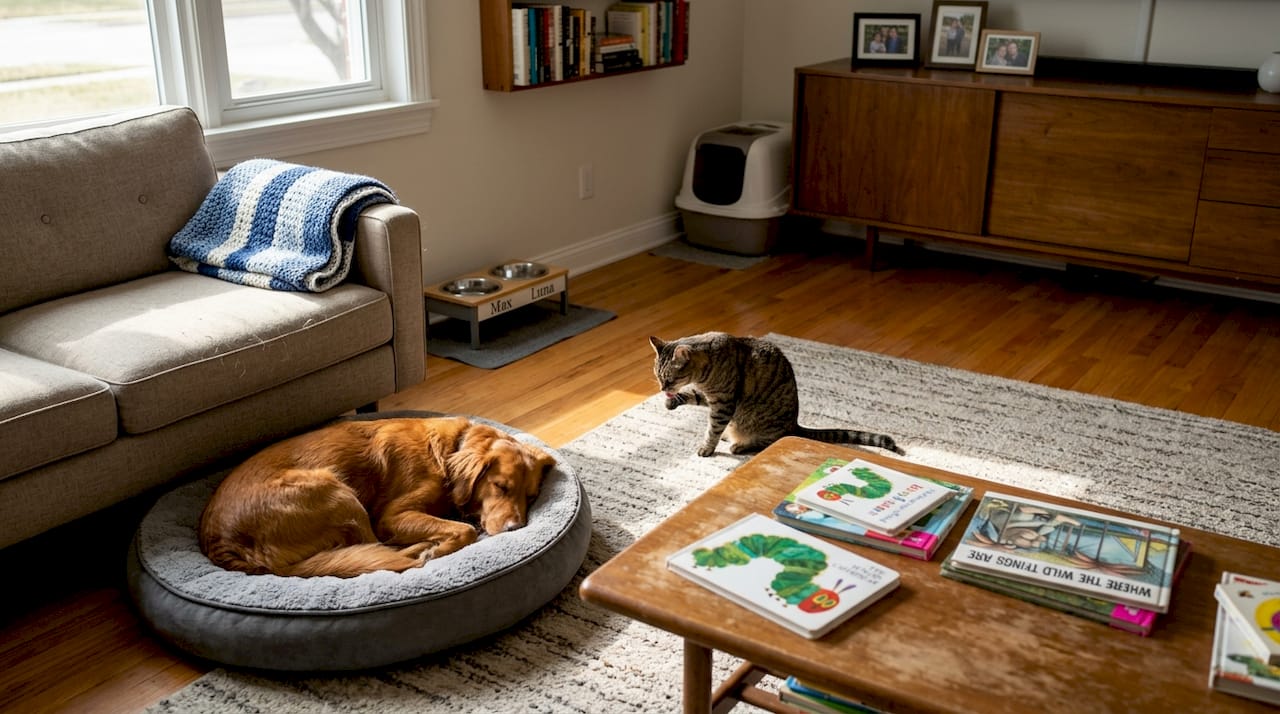
Finally, think about your home setup. A designated feeding spot, a consistent sleeping area, and a clear bathroom zone for dogs all support faster housetraining and reduce confusion for your pet. Structure in the environment reinforces structure in the routine.
Step-by-step daily pet workflow: Morning to night
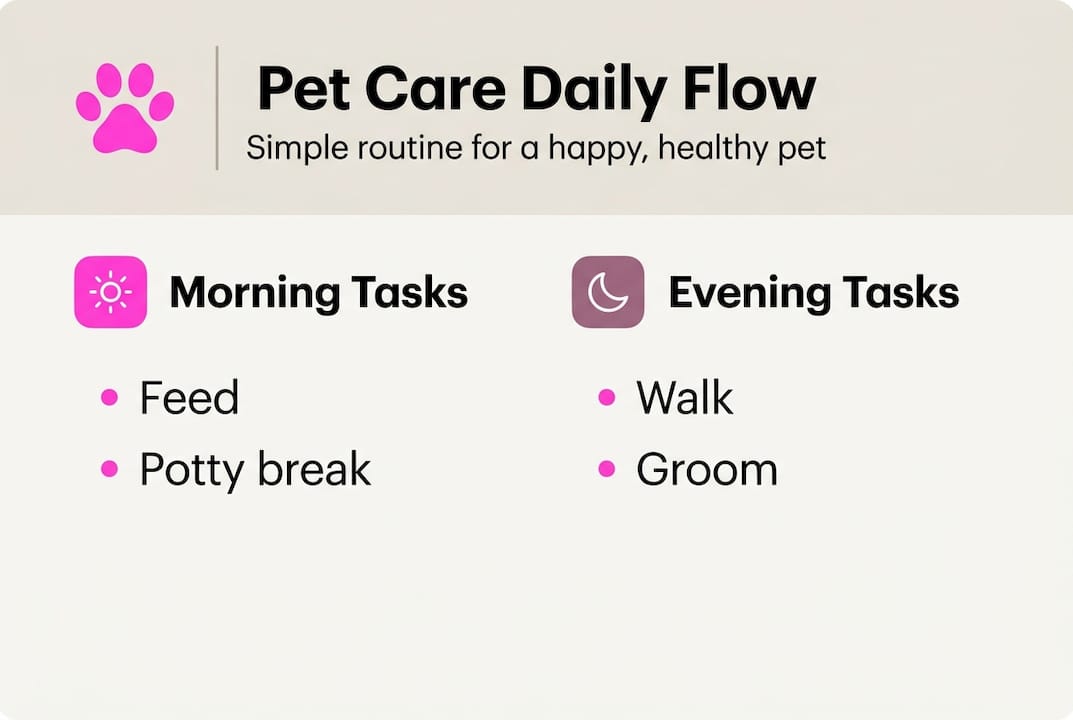
With your essentials ready, you can build a routine that flows smoothly throughout the day. The goal isn’t a military-style schedule. It’s a predictable rhythm your pet can count on.
A practical daily timeline for dogs:
- 6:30 AM Morning potty break immediately after waking
- 7:00 AM Breakfast, fresh water
- 7:30 AM Short walk or backyard time (15 to 30 minutes)
- 12:00 PM Midday potty break or walk
- 5:30 PM Dinner, fresh water
- 6:00 PM Active play or longer walk (20 to 45 minutes)
- 9:00 PM Final potty break before bed
- 9:30 PM Settle into sleeping area
For cats, the rhythm is simpler but still structured:
- 7:00 AM Morning feeding (wet or dry food)
- 7:15 AM Scoop litter box
- 12:00 PM Optional midday feeding for kittens or seniors
- 5:30 PM Evening feeding
- 6:00 PM Interactive play session (10 to 15 minutes)
- 9:00 PM Second litter scoop
The ASPCA notes that cats need food 2 to 3 times daily in small portions, litter scooping once or twice a day, and daily play. That’s a manageable baseline even on your busiest days.
Age changes everything. The AKC confirms that puppies need potty breaks frequently, feeding three times a day, and 16 to 18 hours of sleep. Senior dogs and cats need gentler exercise, more frequent vet check-ins, and sometimes softer food. A solid house training workflow can also make the early weeks with a new pet far less stressful.
Pro Tip: If you work from home, use your own natural breaks (coffee, lunch, end of day) as anchors for your pet’s schedule. Your routine becomes their routine without extra effort.
| Life stage | Feeding frequency | Exercise needs | Sleep hours |
|---|---|---|---|
| Puppy or kitten | 3x daily | Short, frequent bursts | 16 to 18 hours |
| Adult dog or cat | 2x daily | 30 to 60 min daily | 12 to 14 hours |
| Senior pet | 2 to 3x daily | Gentle, shorter sessions | 14 to 18 hours |
Troubleshooting and mistakes: What to watch for and adjust
Even with a schedule, challenges can crop up if routines slip or needs change. The earlier you catch a problem, the easier it is to fix.
The AKC points out that consistency lowers pet anxiety and aids house training, and that not eating or lethargy are key warning signs. Those two signals alone should prompt a call to your vet.
Common workflow mistakes and how to fix them:
- Overfeeding: Follow your vet’s portion guidance, not the bag’s maximum recommendation. Weight gain is slow and easy to miss.
- Skipping medication doses: Keep meds next to your pet’s food bowl so you never forget. Set a phone alarm if needed.
- Changing routines too quickly: Pets adapt slowly. Shift feeding times or walk schedules by 15 minutes per day, not all at once.
- Ignoring litter box hygiene: A dirty box is the number one reason cats eliminate outside it. Scoop daily, clean the box weekly.
- Missing grooming sessions: Skipping even a few days with a long-haired breed can lead to painful mats.
Pro Tip: Keep a simple weekly log (even just a notes app) tracking your pet’s appetite, energy, and bathroom habits. Patterns become obvious fast, and you’ll have useful info ready for your vet.
“The most overlooked part of a pet routine isn’t the feeding or the walk. It’s the daily observation. Knowing your pet’s normal is what lets you catch the abnormal early.”
For pets showing signs of stress or anxious behavior, check out these pet anxiety tips that work within your existing routine. And for a broader view of your pet’s health markers, a pet health checklist gives you a clear framework to follow. The Merck Veterinary Manual also offers a detailed cat care routine for owners who want species-specific guidance.
Modern home integration: Tools and tips for better pet routines
To truly thrive, routines must fit into your family’s unique rhythm and the demands of modern living. A perfect schedule that no one actually follows is just a list.
Petworks notes that digital tools and puzzle feeders improve routine consistency and support mental health for pets. That’s a meaningful combination: technology for the humans, enrichment for the animals.
Practical tools to keep your routine on track:
- Shared family calendar (Google Calendar works well) with color-coded pet tasks
- Pet care apps like Pawtrack or Dogo for reminders and health logs
- Automatic feeders for consistent meal timing when you’re away
- Puzzle feeders and slow bowls to slow eating and add mental stimulation
- Smart water fountains that encourage hydration and alert you when water runs low
Assigning roles in a household matters. When one person handles everything, burnout is real. Divide tasks by strength: one person handles morning walks, another does evening feeding, kids can manage toy rotation or water refills. Rotate weekly so no one gets stuck.
| Home type | Key challenge | Best solution |
|---|---|---|
| Urban apartment | Limited outdoor space | Puzzle toys, indoor play zones |
| Suburban home | Yard access, multiple pets | Scheduled yard time, feeding stations |
| Busy family home | Inconsistent caregivers | Shared app, assigned roles |
| Work-from-home | Blurred boundaries | Use work breaks as pet schedule anchors |
For apartment dwellers especially, thoughtful calming pet furniture can transform a small space into a genuinely comfortable environment for your pet. And if you’re navigating city life with a dog or cat, these urban pet comfort strategies make a real difference in daily quality of life. For more ideas on coordinating family pet care, especially with a new puppy, outside resources can offer helpful frameworks.
Measuring success: How to verify your pet care workflow is working
A workflow only matters if it makes life better, so how can you tell if it’s succeeding?
The AKC confirms that consistent routines enhance well-being, reduce stress, support house training, and help you detect illness early. That last point is huge. Owners who know their pet’s normal are the first to notice when something is off.
Weekly wellness check: A simple numbered framework
- Appetite: Is your pet eating their full portion at each meal?
- Energy: Do they show interest in play and interaction?
- Coat and skin: Is the coat shiny, and is skin free of redness or flaking?
- Bathroom habits: Regular, well-formed stools and normal urination frequency?
- Sleep quality: Are they sleeping in their usual spot without restlessness?
- Behavior: Any new anxiety, aggression, or withdrawal?
If you check yes on all six, your routine is working. If two or more are off, it’s time to adjust the schedule or call your vet.
A thriving pet looks like this: bright eyes, a healthy weight, a coat that feels clean and full, and a willingness to engage with you and their environment. These aren’t vague goals. They’re observable, weekly checkpoints.
For long-term success, revisit your full routine every three months. Seasons change, your schedule shifts, and your pet ages. A routine that worked at age two may need adjustment at age seven. Investing in the right pet comfort and security setup at home also contributes directly to how well your pet rests and recovers between active periods. For cat owners, Sploots Vets offers a practical guide on cat routine effectiveness worth bookmarking.
Why most pet care routines fail (and how to make yours last)
Here’s something most pet care content won’t tell you: the problem usually isn’t knowledge. Most owners know their dog needs a walk and their cat needs a clean litter box. The problem is that routines are designed for ideal days, not real ones.
Over-ambitious schedules collapse under the weight of a long workday, a sick kid, or a weekend trip. We’ve seen it in urban apartments and busy family homes alike. The owners who maintain strong routines long-term aren’t the ones with the most detailed plans. They’re the ones who built in flexibility from the start.
What actually works is anchoring pet care to existing habits rather than creating new time blocks. Feed your dog when you make your own coffee. Scoop the litter box when you brush your teeth at night. These micro-habits are nearly impossible to forget because they’re attached to something you already do.
Your pet also tells you when the routine needs adjusting. A dog who starts pacing at 5 PM is asking for their walk. A cat who meows at 6 AM is pushing back their breakfast time. Learning to read those signals and respond is more valuable than any printed schedule. For city-based owners especially, these urban pet calming techniques help you stay responsive without losing structure.
Upgrade your pet’s daily routine with Teddy Pet
Building a great routine is one part planning, one part having the right environment. When your pet has a dedicated, comfortable space to rest, eat, and play, the whole workflow becomes easier to maintain.

At Teddy Pet, we design pet essentials that fit naturally into your home without cluttering your space or clashing with your style. From cozy beds that give your pet a true retreat to thoughtfully designed feeding and play setups, every product is built to support the kind of daily routine that actually sticks. Explore our pet bedding and comfort solutions and find the pieces that make your pet’s day, and yours, a little smoother.
Frequently asked questions
How often should I brush my dog or cat as part of daily care?
Aim to brush your pet daily, especially for long-haired breeds, since brushing prevents mats, reduces hairballs, and supports skin health. Short-haired pets can be brushed two to three times per week.
What’s the best way to coordinate pet care in a busy family home?
Assign specific tasks to each family member and use a shared digital calendar or pet app for reminders. Apps and calendars keep pet routines consistent even when schedules shift.
How can I tell if my pet care workflow is effective?
Your pet should show consistent energy, a healthy appetite, and relaxed behavior day to day. Consistent routines enable early illness detection and are one of the clearest signs a workflow is doing its job.
How often do dogs and cats need vet visits as part of daily care?
Adult dogs and cats need annual checkups, while seniors benefit from visits every six months. The Merck Veterinary Manual confirms that seniors need vet visits twice yearly to catch age-related changes early.
Recommended
- Pet wellness checklist: Key steps for a healthy, happy pet – Teddy Pet
- Pet Comfort Optimization Guide for Elegant Urban Homes – Teddy Pet
- Pet Wellness at Home: Enhancing Urban Pet Comfort – Teddy Pet
- Pet comfort optimization UAE: 30% less stress & stylish homes – Teddy Pet
- Calm-Companions | Week-1 Puppy Calm Support (Free Checklist)


