


How to keep pets safe at home with style
TL;DR:
- Household hazards for pets include toxic foods, medications, plants, and electrical cords.
- Preventative measures involve secure storage, cord management, and pet-safe decor.
- Routine checks and emergency planning enhance ongoing pet safety at home.
Your home might look spotless, but for your pet, it can be full of invisible threats. Household hazards for pets include toxic foods like chocolate, common medications, cleaning products, and popular houseplants. The good news is that keeping your pet safe does not mean giving up on the home you love. With the right knowledge and a few smart product choices, you can build an environment that protects your animals and still looks beautiful. This guide walks you through every room, every life stage, and every design decision that matters.
Table of Contents
- Identify and eliminate common household hazards
- Pet-proof your living spaces with smart prevention
- Pet safety for specific ages and behaviors
- Integrate pet safety into your home design
- Routine checks, health essentials, and emergency planning
- A smarter approach: Why prevention beats correction
- Find more stylish and safe pet solutions
- Frequently asked questions
Key Takeaways
| Point | Details |
|---|---|
| Spot hidden hazards | Regularly identify and address common dangers like medications, cleaning supplies, and plants to prevent pet injuries. |
| Prevent with smart design | Use locks, gates, and pet-safe materials to blend safety into your home without compromising style. |
| Tailor to your pet | Adjust safety tactics based on your pet’s age and habits, with special care for curious or senior pets. |
| Routine checks are essential | Frequent home sweeps and health check-ups help keep your pets secure over the long term. |
| Choose pet-friendly products | Select decor and cleaning products that are both functional and non-toxic to ensure your pet’s well-being. |
Identify and eliminate common household hazards
Most pet owners are surprised to learn how many everyday items pose a serious risk. The danger is not always obvious. A pretty succulent on the windowsill, a bag of sugar-free gum in your purse, or a bottle of ibuprofen on the nightstand can all send your pet to the emergency room.
Medications are among the top causes of reported pet poisonings in the U.S. And the scale of the problem is bigger than most people realize. Over 400,000 poison calls were made to the ASPCA in 2021 alone. That number should stop you in your tracks.
Here are the most common hazards to address first:
- Toxic foods: Chocolate, grapes, raisins, xylitol (found in gum and peanut butter), onions, and macadamia nuts
- Medications: Human pain relievers, antidepressants, and ADHD drugs are especially dangerous
- Cleaning agents: Bleach, ammonia-based sprays, and fabric softener sheets
- Toxic plants: Lilies (fatal to cats even in tiny amounts), sago palm, azalea, and pothos
- Electrical cords: Chewing through a live cord can cause burns, seizures, or cardiac arrest
- Trash cans: Food scraps, coffee grounds, and discarded medications all end up here
- Antifreeze: Even a teaspoon can be lethal to a small dog or cat
| Substance | Risk level | Common source |
|---|---|---|
| Xylitol | Extremely high | Gum, peanut butter, baked goods |
| Lily plants | Extremely high (cats) | Floral arrangements, gardens |
| Ibuprofen | High | Medicine cabinets |
| Bleach | High | Cleaning supplies |
| Antifreeze | Extremely high | Garage, driveway |
| Grapes/raisins | High | Kitchen counter, snacks |
Emergency contact: Save the ASPCA Animal Poison Control Center number now: (888) 426-4435. Time matters when your pet ingests something toxic.
For safer alternatives around the house, our pet-safe cleaning tips are a great starting point. And if you want to rethink your decor with animals in mind, explore what pet-friendly decor actually looks like in practice.
Pet-proof your living spaces with smart prevention
With these hazards top of mind, let’s turn to practical steps for blocking or minimizing your pet’s access to them. The goal is to control the environment, not to constantly correct your pet’s behavior.
Here is a step-by-step approach to securing your home:
- Install childproof cabinet locks on any cabinet storing cleaning supplies, medications, or food.
- Use locking trash cans in the kitchen and bathroom. A curious dog can empty a bin in seconds.
- Manage electrical cords with cable covers, cord organizers, or by routing them behind furniture.
- Remove or relocate toxic plants to rooms your pet cannot access, or replace them with pet-safe varieties.
- Use baby gates to block off kitchens, laundry rooms, or staircases during unsupervised time.
- Store medications in closed drawers, never on counters or nightstands.
Secure cabinets, locking trash cans, and cord covers are among the most recommended steps by veterinary experts. The best part is that many of these solutions now come in designs that actually look good in a modern home.
| Standard product | Stylish/pet-safe alternative |
|---|---|
| Plastic trash can | Stainless steel locking bin |
| Exposed power strip | Cord management box in neutral tones |
| Wire baby gate | Wooden or matte metal gate |
| Plastic plant pot | Elevated planter out of pet reach |
| Basic cabinet latch | Magnetic childproof lock (hidden) |
Pro Tip: Get down on all fours and do a room-by-room walkthrough at your pet’s eye level. You will spot hazards you never noticed from standing height, including dangling cords, low shelves with medications, and gaps behind appliances.
Our pet safety checklist gives you a printable room-by-room guide, and our house training solutions show how to manage access without making your home feel like a fortress.
Pet safety for specific ages and behaviors
Different pets will have varying vulnerabilities depending on their age and natural behavior. A senior Labrador and a new kitten need very different safety setups, even in the same house.
Puppies and kittens are the highest-risk group. Young pets chew cords, ingest small objects, and may swallow laundry items like socks or rubber bands. Floor-level scanning is essential. Think about anything within 18 inches of the ground as a potential target.
Key risks for young pets:
- Small objects like coins, buttons, and rubber bands
- Laundry left on the floor
- Toilet water (keep lids closed)
- Open dryers and washing machines
- Low furniture gaps where they can get stuck
Senior pets face a different set of challenges. Arthritis and reduced mobility make slippery floors a real fall risk. Older dogs and cats benefit from anti-slip rugs, ramps instead of stairs, and safe bedding options that are low to the ground and easy to get in and out of.
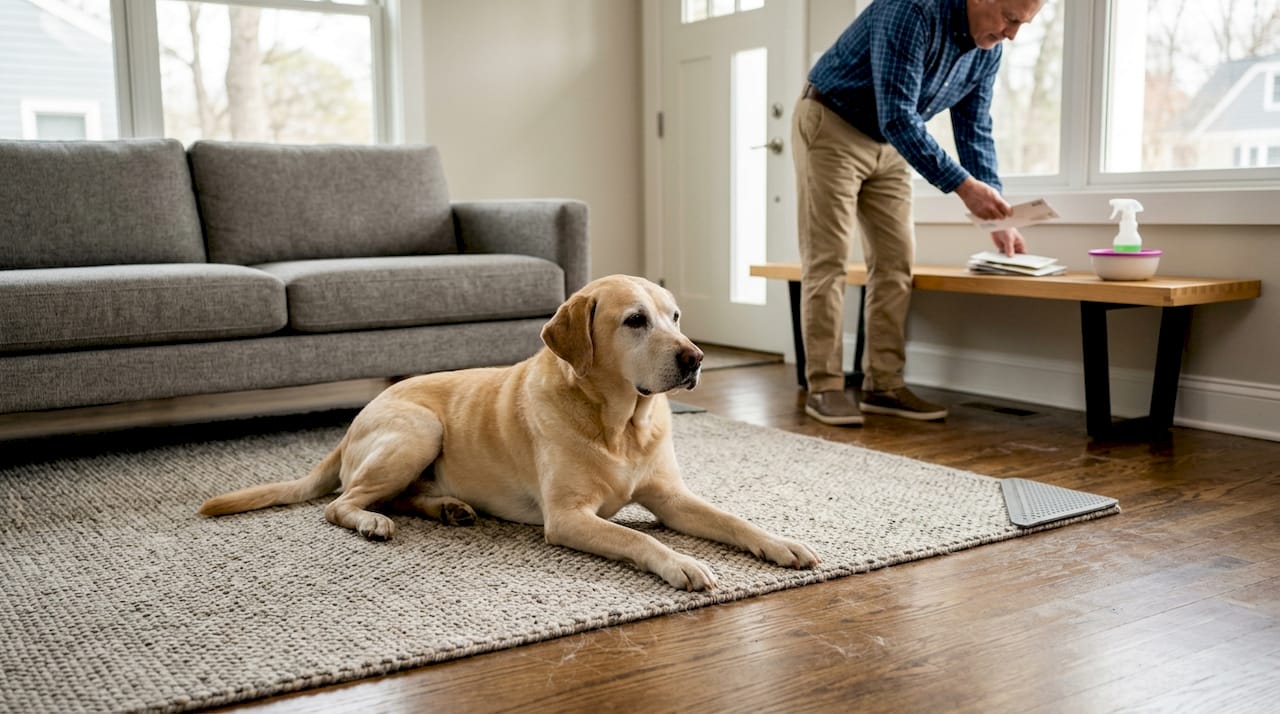
Curious or anxious pets often get into trouble when left alone. If your dog raids the trash every time you leave, that is a behavioral cue telling you the environment needs adjusting, not just the dog. Redirect and control access rather than relying on training alone.
Pro Tip: Match your safety setup to your specific pet. A senior cat needs grip and low-access furniture. A teething puppy needs cord covers and empty floors. One size does not fit all.
Our pet-proofing checklist breaks this down by pet type, and why pet safety matters gives you the bigger picture on long-term animal wellbeing.
Integrate pet safety into your home design
Now that each pet’s unique vulnerabilities are addressed, let’s look at ways to blend safety with the style and comfort you want in your home. The two are not in conflict. In fact, the best pet-friendly interiors are often the most thoughtfully designed ones.
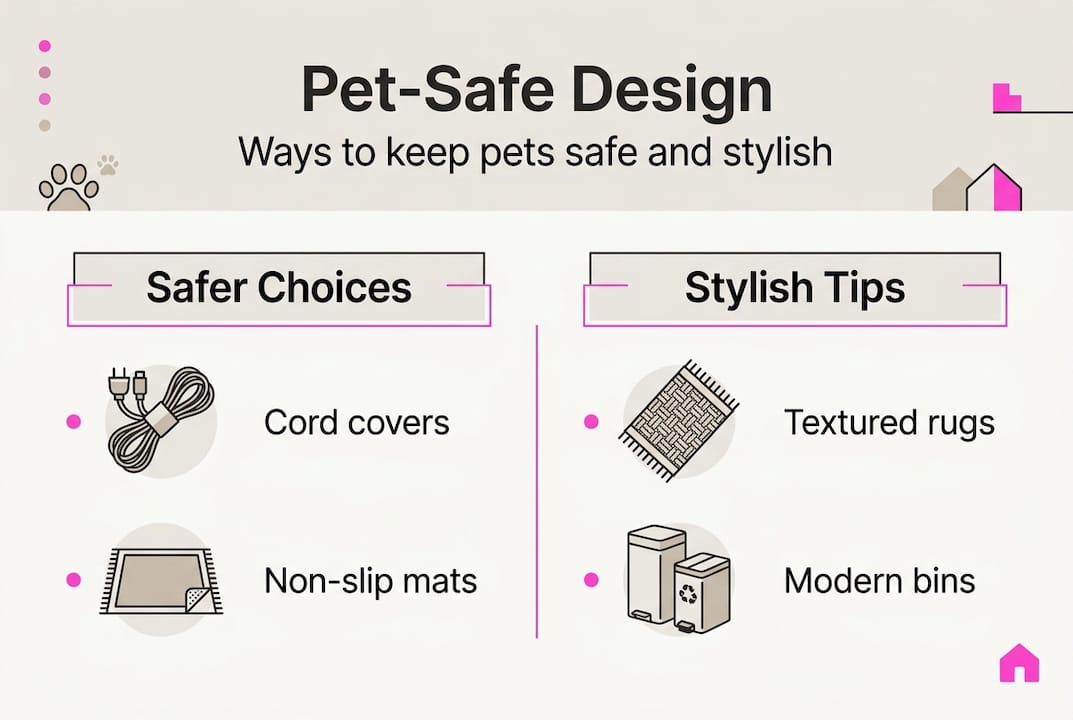
Pet-safe cleaners like diluted vinegar and performance fabrics help maintain both aesthetics and safety. This matters because harsh cleaning chemicals leave residue on floors and surfaces your pet touches constantly.
Here is what to prioritize when designing with pets in mind:
- Non-toxic indoor plants: Boston ferns, spider plants, and calatheas are safe and stylish
- Performance fabrics: Look for stain-resistant, washable upholstery that holds up to claws and fur
- Rounded furniture edges: Reduces injury risk for pets that run and play indoors
- Washable slipcovers: Protect sofas while keeping your space looking clean
- Sealed or smooth flooring: Easier to clean and less likely to harbor bacteria
- Elevated food stations: Keep bowls off the floor to reduce spills and discourage pests
When it comes to cleaning faux leather furniture, which is popular for its durability and easy maintenance, proper cleaning methods protect both the material and your pet from chemical residue.
Pro Tip: Add slip-proof area rugs in hallways and near stairs. They protect senior pets from falls and add warmth to your space without looking like a safety product.
For more ideas, our pet-safe cleaning products guide and pet-friendly decor tips show how real homes balance beauty and function.
Routine checks, health essentials, and emergency planning
Even the best plans require routine checks and a preparedness mindset for long-term safety. A one-time pet-proofing session is a great start, but safety is an ongoing practice.
Here is a simple routine to follow:
- Weekly home sweep: Walk through each room looking for new hazards, especially after grocery shopping or home deliveries.
- Check medications and chemicals: Make sure lids are tight and storage is secure after every use.
- Inspect cords and gates: Look for chew damage or loose fittings that could create new risks.
- Update ID tags: Confirm your pet’s tag has your current phone number.
- Schedule annual vet visits: Catch health issues early before they become emergencies.
- Save emergency numbers: Keep the ASPCA Poison Control number and your nearest emergency vet on your phone.
ASPCA and AVMA recommend microchipping, annual vet checks, and keeping pets out of situations where accidents are likely. Microchipping is one of the most effective tools available. If your pet gets lost or injured, a chip means faster identification and recovery.
Health stat worth knowing: Roughly 50% of dogs and 30% of cats over age 10 develop cancer, and gastrointestinal issues are among the top reasons pets visit emergency vets. Routine wellness visits catch these problems early.
Our pet wellness checklist gives you a structured plan for staying on top of your pet’s health year-round.
A smarter approach: Why prevention beats correction
Here is something most pet safety guides won’t say directly: trying to correct your pet after an accident is almost always too late and too stressful for everyone involved. Prevention is not just safer. It is kinder.
When you design your home with your pet’s safety built in, you stop reacting and start leading. You are not chasing your dog away from the trash every morning. You bought a locking bin. You are not rewashing sofa cushions every week. You chose performance fabric. These are not small decisions. They add up to a calmer, cleaner, and genuinely happier home.
Prevention through storage and access control consistently outperforms correction-based approaches. Design-minded pet owners who invest in functional, stylish products spend less time managing problems and more time enjoying their animals. That is the real payoff.
If you want to go further, our guide on calm pet environments shows how thoughtful design reduces anxiety for both pets and people.
Find more stylish and safe pet solutions
Putting all of this into practice is much easier when you have the right products. At Teddy Pet, we design modern pet essentials that work with your interior, not against it. Every piece is built for comfort, safety, and style so your home stays beautiful while your pet stays protected.

From cozy beds to functional feeding stations, our full range at Teddy Pet is curated for pet owners who care about both design and wellbeing. If you are looking for room-by-room inspiration, our cozy pet space ideas show exactly how other pet owners have created safe, stylish spaces that work in real homes. Browse, get inspired, and build the space your pet deserves.
Frequently asked questions
What are the top hidden dangers for pets in modern homes?
Common household hazards include human medications, toxic foods, cleaning chemicals, certain plants like lilies, electrical cords, and unsecured trash cans. Many of these are easy to overlook because they are part of everyday life.
How can I make my home safer for a new puppy or kitten?
Secure floor-level items, use cord covers, keep small objects and laundry out of reach, and block off risky areas with gates. Young pets chew cords and swallow objects, so floor-level scanning is your most important first step.
Are there non-toxic cleaning solutions that keep both pets and interiors safe?
Yes. Pet-safe cleaners like diluted vinegar and baking soda are effective for most surfaces, and commercial eco-products labeled pet-safe are widely available. Avoid anything with bleach, ammonia, or phenols.
What routine should I follow to keep my pet consistently safe at home?
Conduct weekly hazard sweeps, keep up with annual vet visits, and save emergency contact numbers in your phone. Annual vet checks and microchipping are two of the highest-impact habits you can build.
Why is microchipping important for pets’ safety?
Microchipping helps reunite lost pets with their owners quickly and ensures your animal is identified in an emergency. ASPCA and AVMA recommend it for all U.S. pet owners as a baseline safety measure.
Recommended
- Top safe pet accessories to blend style and comfort – Teddy Pet
- Pet-Safe Cleaning: Protecting Pets and Stylish Spaces – Teddy Pet
- Pet Comfort Optimization Guide for Elegant Urban Homes – Teddy Pet
- Role of pet essentials in home decor: stylish function – Teddy Pet
- All Season Dog House Style Bed - Removable Washable Pet Bed for Small – Baby Paradise


