


Why Pet Safety Matters for Urban Pet Owners
Finding a balance between a stylish home and a truly safe environment for your pet often feels like a challenge in Dubai’s fast-paced urban spaces. Living in high-rises or modern villas means thinking beyond food and shelter to protect your companion from everyday hazards and stress. By prioritizing both design and comprehensive pet safety, you set the foundation for a peaceful, healthy home where pets and people thrive together.
Table of Contents
- Defining Pet Safety In The Modern Home
- Types Of Pet Safety Risks And Hazards
- Legal Pet Safety Requirements In The UAE
- Practical Essentials For Pet-Friendly Interiors
- Common Mistakes Urban Pet Owners Should Avoid
Key Takeaways
| Point | Details |
|---|---|
| Understanding Pet Safety | Pet safety involves physical protection, health management, emotional well-being, emergency preparedness, and legal compliance to ensure a safe environment for pets. |
| Urban Considerations | Urban living presents unique challenges such as hazardous high-rise living and heat-related risks, necessitating specific safety measures for pets. |
| Legal Responsibilities | UAE laws require pet owners to ensure proper care, veterinary attention, and compliance with registration to avoid penalties and ensure animal welfare. |
| Pet-Friendly Environment | Design homes with pet safety in mind by choosing suitable flooring, furniture, and designated pet zones that reduce stress and prevent accidents. |
Defining Pet Safety in the Modern Home
Pet safety in urban homes goes far beyond feeding your dog or cat on time. It’s about creating an environment where your pet can thrive physically and emotionally while minimizing risks from health hazards, accidents, and stress.
In Dubai’s modern apartments and villas, pet owners face unique challenges. High-rise living, extreme heat, and the fast-paced urban lifestyle demand thoughtful safety planning that most people overlook until something goes wrong.
What Pet Safety Really Means
Pet safety encompasses several interconnected areas:
- Physical protection from household hazards, toxic substances, and injury risks
- Health management including preventative care, proper nutrition, and disease prevention
- Emotional well-being through appropriate socialization, exercise, and mental stimulation
- Emergency preparedness for medical crises, natural disasters, or unexpected situations
- Legal compliance with local regulations and responsible ownership requirements
The CDC emphasizes that disease transmissions from animals to people require attention alongside physical safety measures. Pet safety also means maintaining clean pet supplies and ensuring proper food handling to prevent illness in your household.
Understanding proactive measures for both physical and emotional well-being helps you avoid common mistakes. Modern technologies like microchipping and GPS tracking add layers of protection that weren’t available to previous generations of pet owners.
Why It Matters in Urban Settings
Urban pet owners face concentrated risks. Your pet lives in closer proximity to traffic, unfamiliar animals, and confined spaces than their suburban counterparts.
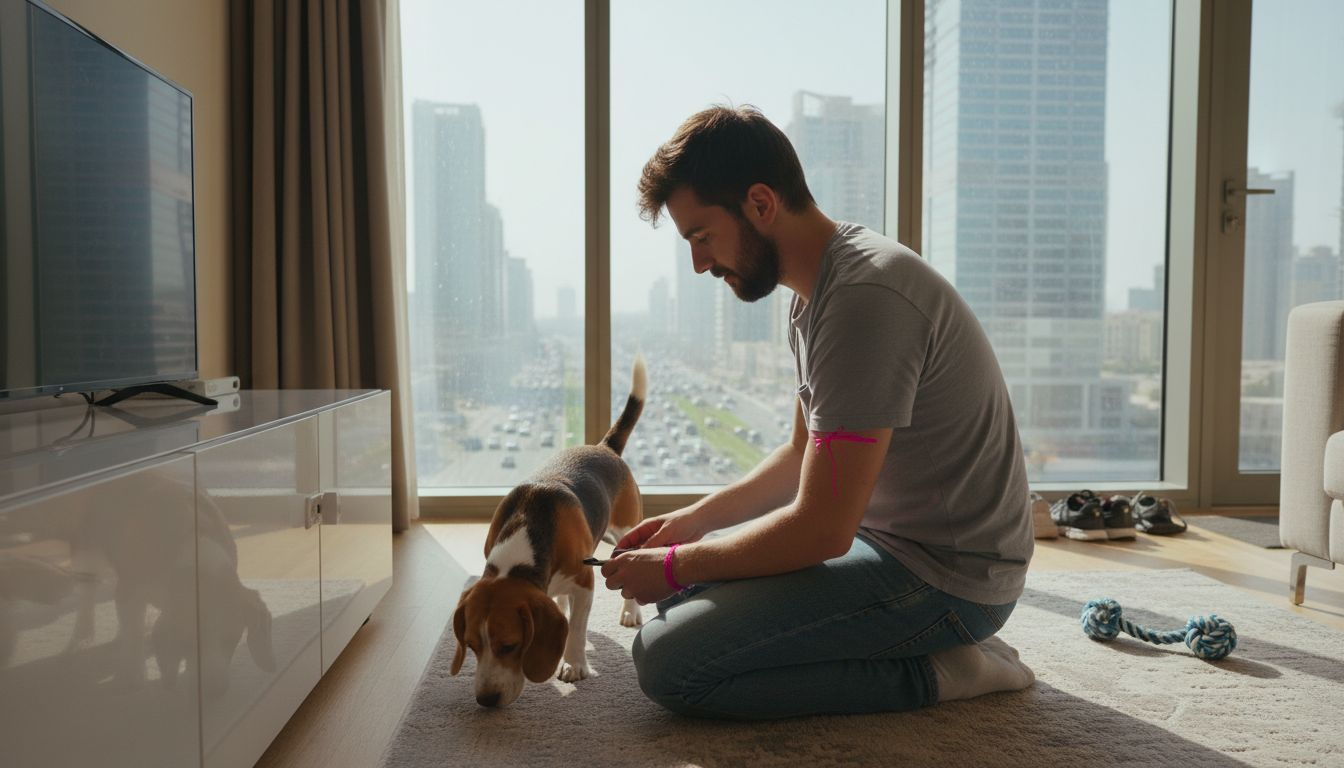
Dubai’s intense summer temperatures create immediate dangers. Heatstroke can develop in minutes on hot tiles or in a car. Balconies present fall hazards that rural homes don’t present.
Apartment living also increases stress-related behavioral problems if safety measures aren’t in place. Your pet needs secure spaces, proper ventilation, and mental enrichment tailored to confined living.
Pet safety isn’t about being overprotective—it’s about understanding real risks and taking practical steps to eliminate them.
Creating a Safety-First Mindset
Effective pet safety starts with recognizing that your home contains hazards you probably haven’t considered yet. Cleaning products, electrical cords, certain plants, and human foods pose genuine threats.
Your responsibility extends to legal obligations. Local UAE regulations require proper pet care, veterinary visits, and appropriate housing. Neglecting these creates liability for you and suffering for your pet.
A safety-first approach means regularly auditing your space, staying informed about emerging risks, and adjusting your practices as your pet’s needs change. What worked for your kitten won’t work for your adult cat.
Pro tip: Start your safety assessment by walking through your home at your pet’s eye level—literally get down on the floor to spot hazards you’d miss standing up.
Types of Pet Safety Risks and Hazards
Urban homes contain hidden dangers that most pet owners don’t recognize until it’s too late. Understanding the specific risks your pet faces is the first step toward preventing accidents and illness.
Pet safety hazards fall into three main categories: biological, chemical, and physical. Each requires different prevention strategies tailored to your Dubai home and your pet’s behavior.

Here’s a quick overview of the main types of pet safety hazards and their unique challenges for urban homes:
| Hazard Type | Common Urban Challenge | Recommended Prevention |
|---|---|---|
| Biological | Disease spread in close quarters | Regular vet visits, hygiene |
| Chemical | Toxic items in modern apartments | Secure storage, check labels |
| Physical | High-rise falls, compact spaces | Nets, safe toys, cord covers |
| Stress-Related | Noise, isolation, small spaces | Safe zones, mental enrichment |
Biological Hazards
Biological hazards include diseases, parasites, and contamination risks. Your pet can become sick from multiple sources, and some conditions spread to your family.
Zoonotic pathogens pose public health risks, especially to children, elderly family members, and immunocompromised individuals in your household. Pet food safety matters significantly—contaminated food or raw diets can harbor dangerous bacteria.
Common biological risks include:
- Parasites from contaminated soil or other animals
- Intestinal bacteria from improper food handling
- Respiratory viruses spread through contact
- Skin infections transmitted between pets and humans
Proper hygiene, regular veterinary checkups, and appropriate vaccination protocols protect both your pet and your family. Feed your pet from clean bowls and store food properly to prevent microbial growth.
Chemical Hazards
Your home contains numerous toxic substances your pet might ingest or inhale. Many common household items are poisonous to animals.
Chemical hazards include:
- Cleaning products stored under sinks or in open cabinets
- Medications and supplements left on counters
- Certain plants toxic to dogs and cats
- Pesticides, fertilizers, and air fresheners
- Paint, solvents, and automotive fluids in storage areas
Dubai’s heat intensifies these risks. Fumes from cleaning products become more potent in high temperatures. Pet-safe cleaning solutions eliminate chemical exposure while maintaining your stylish space.
Store all hazardous materials in locked cabinets away from pet access. Read product labels carefully—some “natural” products still contain harmful ingredients.
Physical Hazards
Physical injuries are the most visible but often preventable pet safety concern. Urban environments create specific risks.
Physical hazards in apartment living include:
- Falls from balconies or windows (especially dangerous in high-rises)
- Electrical cord injuries from chewing
- Choking hazards from small objects or toys
- Burns from hot surfaces, stoves, or heaters
- Entanglement in cords, blinds, or furniture
- Traffic accidents on busy Dubai streets
Secure your balcony with protective netting designed for pets. Remove small objects your pet could swallow. Provide appropriate toys that match your pet’s size and chewing habits.
The most dangerous hazards are the ones you don’t think about until something goes wrong—prevention beats emergency care every time.
Stress-Related Risks
Psychological stress creates physical health problems in pets. Anxiety triggers destructive behavior, aggression, and illness.
Urban stressors include loud noises, frequent visitors, isolation, and confinement. Anxious pets may escape, injure themselves, or develop behavioral issues requiring professional intervention.
Pro tip: Create a “safe zone” in your home with your pet’s bed, toys, and water bowl—a quiet space where they can retreat when stressed or scared.
Legal Pet Safety Requirements in the UAE
Pet ownership in the UAE isn’t just a personal choice—it comes with legal obligations. The government has established clear requirements to protect animal welfare and public health.
Ignoring these requirements can result in significant fines, confiscation of your pet, or legal action. Understanding your responsibilities ensures your pet receives proper care and protects you from penalties.
Federal Animal Protection Laws
The UAE enforces comprehensive animal protection standards through Federal Law No. 16 of 2007. This legislation sets the foundation for responsible pet ownership across the entire country.
Federal animal protection laws require pet owners to provide appropriate care, adequate shelter, proper nutrition, and regular veterinary attention. The law explicitly prohibits cruelty, neglect, and harmful practices.
Key legal obligations include:
- Providing sufficient food and fresh water daily
- Maintaining clean, safe living spaces appropriate for your pet’s species
- Scheduling regular veterinary checkups and vaccinations
- Preventing your pet from causing harm to others
- Reporting animal abuse or neglect to authorities
Violations can result in fines, imprisonment, or both. The law applies equally to pet owners, breeders, and animal care professionals.
Abu Dhabi Pet Registration Requirements
Starting February 2026, Abu Dhabi implemented mandatory pet registration. This marks a major shift toward regulated, traceable pet ownership in the emirate.
All dog and cat owners must register their pets through the TAMM platform. Registration requirements include:
- Microchipping for permanent identification
- Vaccination proof, particularly rabies protection
- Owner information and contact details
- Pet details including breed, age, and health status
Failure to register results in fines up to AED 1,000. The system helps authorities track vaccinations, manage stray populations, and reunite lost pets with owners quickly.
Dubai and other Emirates may implement similar requirements. Check your local municipality’s website for current registration deadlines and procedures.
Here’s a summary of legal pet safety requirements for UAE residents:
| Requirement | Who Is Affected | Key Action Needed | Consequences of Neglect |
|---|---|---|---|
| Animal Welfare Law | All pet owners | Provide care, shelter | Fines, legal action |
| Pet Registration | Abu Dhabi owners | Microchip and register | Up to AED 1,000 fine |
| Veterinary Standards | All pet owners | Annual exams, vaccines | Disease, penalties |
| Liability | All pet owners | Control pet, insurance | Civil claims, compensation |
Veterinary Care Standards
Regular veterinary care is a legal requirement, not optional. Your pet must receive preventative care and treatment for illness or injury.
Minimum veterinary care includes:
- Annual health examinations
- Vaccination updates as scheduled
- Parasite prevention and treatment
- Emergency care for injuries or illness
- Professional grooming and dental care
Legal compliance protects your pet’s health, prevents disease spread, and keeps you from facing serious penalties or losing your pet.
Liability and Responsibility
You’re legally responsible for any harm your pet causes to people or property. This includes bites, injuries, or property damage.
Your pet must remain under control at all times in public spaces. Keep dogs leashed, use appropriate carriers for cats in vehicles, and prevent your pet from approaching strangers without permission.
If your pet injures someone, you may face civil liability claims. Pet liability insurance provides financial protection in these situations.
Traveling with Pets
Moving or traveling with your pet requires specific documentation and permits. International travel demands health certificates, vaccinations, and microchip registration.
Within the UAE, transporting pets requires appropriate carriers and documentation. Never leave pets unattended in vehicles, as this violates animal welfare laws.
Pro tip: Keep digital copies of all your pet’s vaccination records, microchip registration, and veterinary health certificates in cloud storage—they’re essential for registration, travel, and emergency situations.
Practical Essentials for Pet-Friendly Interiors
Your home’s interior design directly impacts your pet’s safety and well-being. A truly pet-safe space balances style with practicality, creating an environment where both you and your pet thrive.
Dubai’s modern apartments demand smart design choices. Sleek finishes, light furnishings, and open layouts look beautiful but require intentional planning to stay safe for pets.
Smart Flooring Choices
Flooring is your foundation for pet safety. The right surfaces protect your pet’s joints, prevent slips, and stay easy to clean when accidents happen.
Resilient flooring options include:
- Porcelain tiles with textured finishes for grip
- Engineered wood resistant to moisture and scratches
- Polished concrete sealed for durability
- High-quality vinyl planks that mimic natural materials
Avoid slippery marble or glossy tiles that cause falls. Hardwood floors are beautiful but vulnerable to moisture damage from accidents. Scratch-resistant surfaces protect your investment while remaining safe for paws.
Layer durable rugs in high-traffic areas. Choose low-pile options that shed less and trap fewer allergens than plush carpets.
Furniture and Fabric Selection
Your furniture absorbs the most pet-related wear. Selecting durable, washable fabrics from the start saves money and stress later.
Best fabric choices for pet homes:
- Microfiber (stain-resistant and durable)
- Performance fabrics designed for high-traffic use
- Leather or faux leather (wipeable and long-lasting)
- Tightly woven naturals like linen blends
Avoid delicate fabrics, light colors on upholstery, and furniture with exposed wood edges. Choose pieces with rounded corners to prevent injury during play. Removable, washable slipcovers add flexibility without sacrificing style.
Position furniture thoughtfully. Leave clear pathways for your pet to move freely without knocking over fragile items.
Creating Safe Pet Zones
Designated pet spaces reduce stress and prevent destructive behavior. These zones should feel secure and comfortable while fitting seamlessly into your decor.
Essential elements for pet zones:
- Comfortable, washable bedding in a quiet corner
- Easy access to fresh water
- Elevated resting spots for cats
- Toys and enrichment items within reach
- Good ventilation away from direct sun
Cosy pet spaces in modern homes integrate naturally with contemporary design. Your pet’s zone shouldn’t look like an afterthought—it should complement your interior aesthetic.
Consider built-in solutions like window seats or under-stair nooks. These provide security while maintaining visual flow in your space.
Paint and Protective Surfaces
Wall finishes matter more than you might think. High-moisture, wipeable paints resist stains and scratches from pet activity.
Choose semi-gloss or satin finishes for walls where pets spend time. These clean easily and resist marks better than flat paint. Matte finishes look more sophisticated but stain permanently.
Protect lower wall sections with washable wainscoting or protective panels. This prevents nose marks, muddy paw prints, and scratches from damaging your walls.
Effective pet-friendly design doesn’t mean sacrificing style—it means making smart material choices that actually improve your home’s durability.
Safety Details and Finishing Touches
Small details prevent injuries and accidents. Secure electrical cords, anchor furniture to walls, and remove toxic plants from accessible areas.
Safety essentials include:
- Cord covers and cable management solutions
- Baby gates to restrict access to unsafe areas
- Non-toxic plants only
- Soft padding on sharp furniture corners
- Secure storage for cleaning products and medications
Pro tip: Photograph your current interior setup, then use design apps to test pet-friendly furniture and color changes virtually before purchasing—this saves money and ensures your aesthetic stays cohesive.
Common Mistakes Urban Pet Owners Should Avoid
Many pet owners make critical safety mistakes without realizing the consequences. These errors often stem from good intentions but lack of knowledge about what pets actually need.
Avoiding these pitfalls protects your pet’s health and prevents behavioral problems that lead to surrender or worse. Understanding common mistakes is your first line of defense.
Impulsive Pet Acquisition
Getting a pet on impulse is one of the biggest mistakes urban owners make. A beautiful puppy or kitten in a shop window doesn’t account for your actual lifestyle and home situation.
Impulsive pet acquisition without adequate planning leads to pets that don’t match the owner’s capacity to care. In Dubai’s demanding climate and fast-paced lifestyle, this mismatch creates serious problems.
Before getting a pet, consider:
- Your work schedule and time availability
- Your apartment’s size and layout
- Your financial capacity for veterinary care
- Your long-term plans (relocating, career changes)
- Your pet’s breed-specific needs and temperament
Research thoroughly. Talk to veterinarians and current pet owners. A weeks-long decision is better than years of struggle.
Neglecting Breed-Specific Behaviors
Different breeds have vastly different needs. A high-energy breed trapped in a small apartment without exercise becomes destructive and anxious.
Common breed-related mistakes include:
- Expecting calm behavior from naturally energetic breeds
- Ignoring grooming requirements for long-haired dogs
- Underestimating space needs for large breeds
- Misunderstanding prey drive in hunting breeds
- Ignoring social needs of pack animals
Your pet isn’t being “bad”—they’re expressing unmet biological needs. Invest time learning what your specific pet requires to thrive.
Skipping Veterinary Care
Regular vet visits aren’t optional. Many urban owners delay checkups or skip vaccinations to save money, creating serious health consequences.
Essential veterinary practices include:
- Annual wellness examinations
- Timely vaccinations and boosters
- Parasite prevention year-round
- Dental care and professional cleanings
- Immediate attention to illness or injury
Delayed care often costs more when problems become emergencies. Preventative medicine is always cheaper than crisis management.
Medication and Treatment Mistakes
Using expired medications or unverified home remedies puts your pet at serious risk. Well-meaning but incorrect treatments can cause harm or mask serious conditions.
Common treatment errors:
- Administering human medications to pets
- Using expired or shared pet medications
- Trying unproven home remedies instead of vet consultation
- Guessing dosages instead of getting professional advice
- Stopping medications without veterinary approval
Always consult your veterinarian before treating any condition. What works for one pet can be dangerous for another.
Off-Leash in Unsafe Environments
Urban areas present constant hazards—traffic, unfamiliar dogs, toxic substances, and strangers. Letting your pet off-leash without proper training is reckless.
Even well-trained pets can become distracted or scared and run into danger. In Dubai’s heat and heavy traffic, off-leash time puts your pet in immediate peril.
The costliest mistakes are the ones that result in lost, injured, or dead pets—prevention through basic safety practices saves lives.
Inconsistent Training and Rules
Pets need consistency to feel secure. Changing rules, using different names, or inconsistent commands creates confusion and behavioral problems.
Your pet doesn’t understand “sometimes it’s okay.” They need clear, consistent expectations and immediate corrections when rules are broken.
Poor Nutrition Choices
Not all pet food is created equal. Feeding cheap, low-quality food causes long-term health problems that become expensive veterinary issues.
Investing in quality nutrition prevents obesity, digestive issues, skin problems, and organ disease. Better food means fewer vet visits.
Pro tip: Create a written safety checklist for your home covering hazards, medication storage, vet contact information, and emergency protocols—review it quarterly as your pet’s needs change.
Elevate Your Urban Pet’s Safety and Comfort with Teddy Pet
Living in a bustling city presents unique challenges for your pet’s well-being. The article highlights the dangers urban pets face from physical hazards, stress, and environmental risks in high-rise apartments or villas. Teddy Pet understands these concerns and offers thoughtfully designed solutions that prioritize comfort, safety, and style. From secure and cozy resting places to engaging toys that reduce anxiety, our range helps your pet feel safe while enhancing your modern home.
Discover how you can create a sanctuary for your furry friend with our Rest & Retreat collection designed for safe and relaxing spaces. Bring joy and security to your pet’s daily routine with interactive products from our Play & Bond category.
Make pet safety a priority now by exploring Teddy Pet’s curated essentials at https://teddy-pet.com. Transform your urban living environment into a safe haven where your pet thrives without compromising your home’s aesthetic.
Frequently Asked Questions
What are the most common pet safety hazards in urban homes?
Common pet safety hazards in urban homes include biological risks (like disease spread), chemical hazards (such as toxic cleaning supplies), and physical dangers (like falls from heights). Stress-related risks from loud noises and confined spaces also pose significant challenges for pets in urban settings.
How can I create a pet-friendly environment in my apartment?
To create a pet-friendly environment, you should choose non-toxic materials for cleaning, secure your balcony or windows, and ensure your furniture has rounded corners. Designate safe zones for your pet with comfortable bedding and easy access to water and toys.
Why is regular veterinary care important for urban pets?
Regular veterinary care is crucial for urban pets to ensure their health and well-being. It helps in preventing diseases, providing vaccinations, and addressing health issues before they become emergencies. Additionally, it is a legal requirement for responsible pet ownership.
What steps can I take to prevent my pet from experiencing stress in an urban environment?
To reduce stress for your pet, create safe zones where they can retreat, provide ample mental stimulation through toys, and ensure regular exercise. Establishing a consistent routine and getting down to their eye level to identify potential stressors in your home can also be beneficial.
Recommended


