


Creating safe pet play areas in UAE: Cut injuries by 30%
Many pet owners in the UAE face a frustrating dilemma when designing their homes. They want beautiful, stylish spaces that reflect modern interior design trends, yet they also need safe, comfortable play areas for their dogs. Without careful planning, play zones can expose pets to toxic plants, unsafe surfaces, or inadequate shade in extreme heat. Thoughtful design transforms these risks into opportunities, creating spaces where pets thrive and homes remain elegant.
Table of Contents
- Prerequisites: What You Need To Get Started
- Step-By-Step Setup Process
- Maintenance And Safety Upkeep
- Common Mistakes And Troubleshooting
- Expected Results And Budgeting
- Alternative Approaches And Tradeoffs
- Summary And Final Recommendations
- Enhance Your Pet’s Comfort With Teddy Pet Solutions
- Frequently Asked Questions
Key takeaways
| Point | Details |
|---|---|
| Non-toxic plants prevent poisoning | Use safe varieties like lavender and rosemary in play areas |
| Rubber and pea gravel flooring cut injuries | Proper surfaces reduce paw injuries and slipping by up to 30% |
| Shade zones lower heat stress | Pergolas and trees reduce surface temperatures by 15-20°C |
| Weekly maintenance cuts pest risks | Regular cleaning reduces ticks and mosquitoes by up to 70% |
| Secure fencing prevents escapes | Install 6-foot fences with locked gates for maximum safety |
Prerequisites: What you need to get started
Before building your pet play area, proper preparation sets the foundation for success. You need to understand your space limitations, your dog’s unique behavioral needs, and the materials that keep pets safe in UAE’s hot climate.
Start by assessing your available space. Measure indoor rooms or outdoor yards carefully, noting sunlight patterns and existing structures. Observe your dog’s activity level and play preferences. Does your pet prefer digging, running, or lounging? These behaviors directly influence your design choices.
Next, research pet-safe plants and materials thoroughly. Using non-toxic plants such as lavender, rosemary, and marigolds reduces the risk of pet poisoning significantly. Create a checklist of approved plants and avoid common toxic varieties like lilies, oleander, and sago palms.
Gather your tools and safety equipment:
- Measuring tape and marking spray for layout planning
- Fencing materials rated for at least 6 feet height
- Post hole digger and concrete for fence installation
- Safety gloves and protective eyewear
- Level and hammer for securing structures
Prepare a comprehensive safety checklist addressing escape risks, injury hazards, and heat exposure. Identify weak points in existing fencing or areas where pets might dig underneath barriers. Consider pairing outdoor play zones with indoor calming pet furniture that offers retreat spaces when your dog needs rest.
Step-by-step setup process
Creating your pet play area requires systematic execution, starting with layout design and ending with finishing touches that prioritize safety and style.
1. Design your layout
Sketch your play area on paper, marking zones for activity, rest, and landscaping. Factor in your dog’s size and energy level. Active breeds need more running space, while smaller dogs appreciate cozy corners.
2. Select safe materials and plants
Choose non-toxic, durable materials that withstand UAE’s climate. Install plants from your approved list in designated areas. Use decorative pots or borders to separate plant zones from active play spaces.
3. Install secure fencing
Install fencing at least 6 feet high with posts set in concrete for stability. Add secure gate locks that dogs cannot open accidentally. Check for gaps at ground level where pets might squeeze through or dig underneath.
4. Lay comfortable flooring
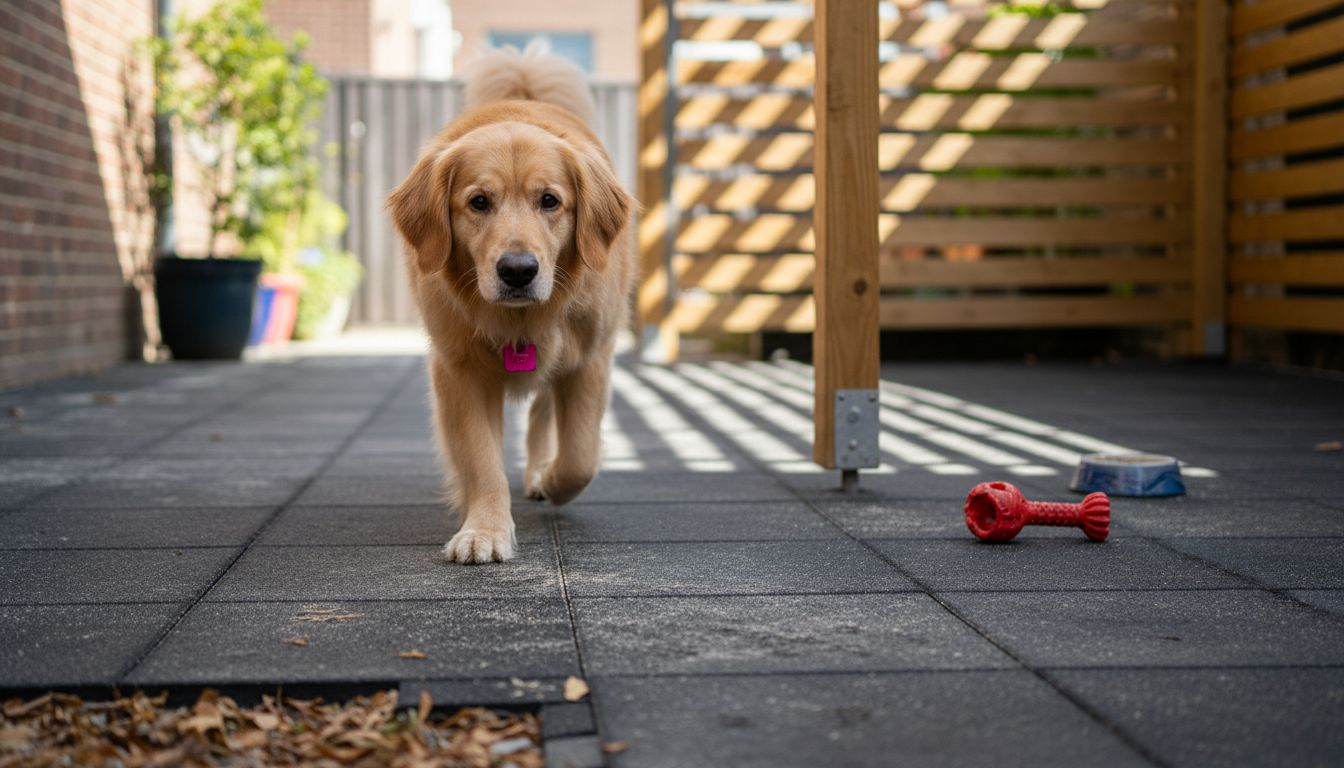
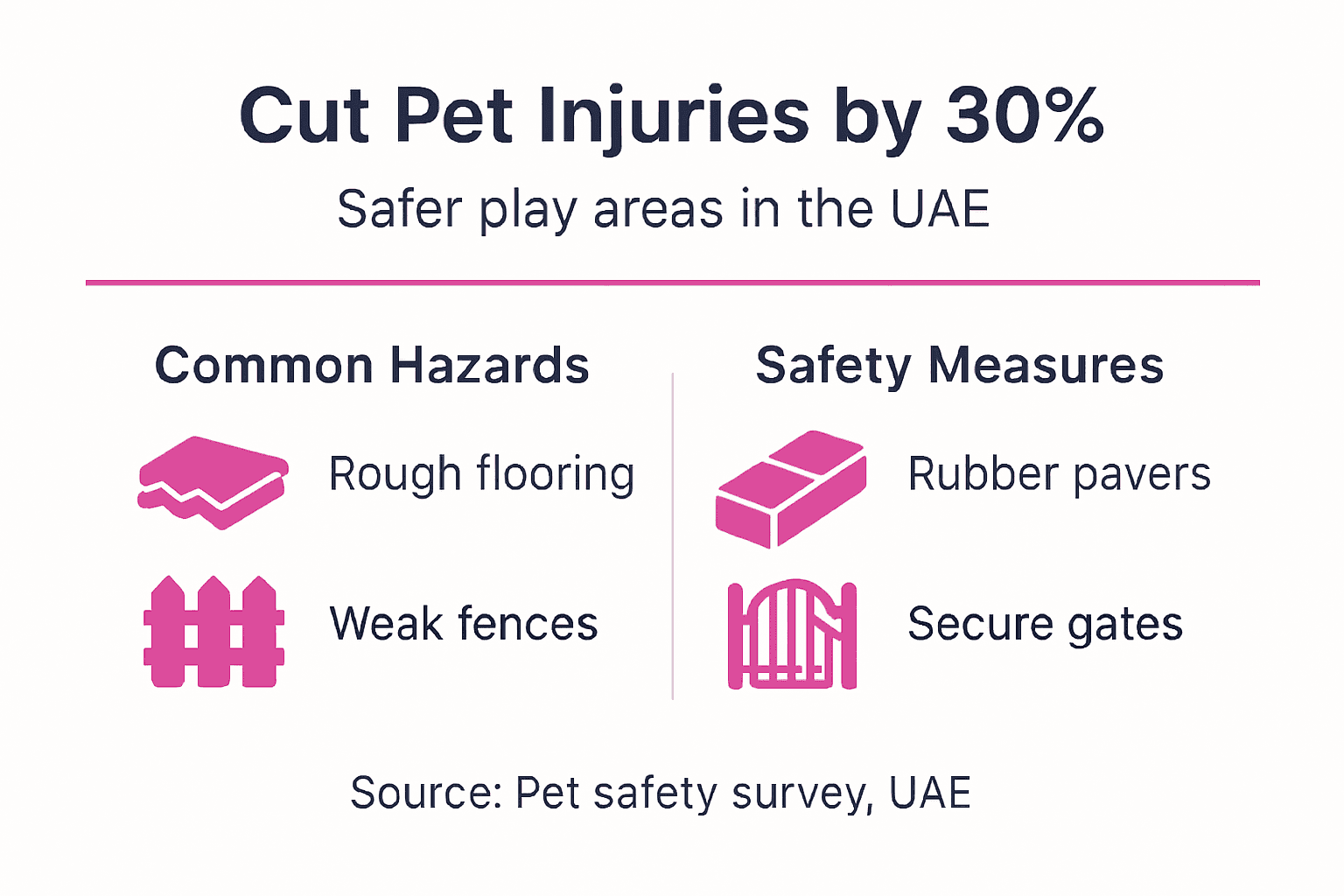
Rubber pavers and smooth pea gravel surfaces reduce paw injuries and slipping risks by up to 30%. Choose safe and comfortable flooring materials that stay cool underfoot. Avoid concrete, which reaches dangerous temperatures in direct sun.
5. Create shaded zones
Shaded zones from pergolas, umbrellas, and trees lower heat stress risks by up to 15-20°C. Position shade structures strategically to cover at least half the play area during peak afternoon heat. Consider adding dog cooling solutions for extra comfort during summer months.
6. Add engaging play equipment
Install DIY agility courses using safe materials like PVC pipes and wooden platforms. Create designated digging areas filled with sand where your dog can satisfy natural instincts without damaging landscaping. Secure all equipment firmly to prevent tipping.
7. Protect plants with raised beds
Using raised garden beds protects plants and reduces accidental ingestion risks by over 50%. Build raised garden beds at least 12 inches high to keep curious noses away from delicate plants. This approach maintains visual appeal while enhancing safety.
For comprehensive design strategies, review this pet comfort optimization guide that addresses UAE-specific challenges.
Maintenance and safety upkeep
Your play area requires ongoing care to remain safe and inviting. Regular maintenance prevents hazards before they endanger your pet.
Establish weekly cleaning routines. Remove standing water from containers, bowls, and low spots where mosquitoes breed. Clear away fallen leaves, twigs, and garden debris that harbor pests or create tripping hazards. Weekly maintenance routines reduce pests like ticks and mosquitoes by up to 70%, protecting your dog from disease-carrying insects.
Trim plants regularly to maintain clear sight lines and prevent overgrowth from encroaching on play zones. Prune branches that hang low enough for dogs to chew. Check plants for signs of disease or pest infestation that could spread to other areas.
Inspect fences and gates weekly for damage. Look for loose screws, cracked posts, or gaps developing at ground level. Test gate locks to ensure they latch securely. Weather and active pets can weaken structures over time, making routine checks essential for preventing escapes.
Adapt your maintenance routines for pets seasonally. During summer, increase watering frequency for plants and check cooling equipment daily. In cooler months, focus on debris removal as plants shed leaves. Clean play surfaces thoroughly to minimize slipping hazards from mud or algae growth.
Pro Tip: Create a maintenance calendar on your phone with reminders for weekly, monthly, and seasonal tasks. Consistent scheduling makes safety checks automatic rather than forgotten. Learn more about the importance of ongoing safety checks in our detailed safety guide.
Common mistakes and troubleshooting
Even well-intentioned pet owners make errors that compromise safety. Recognizing these mistakes helps you correct them quickly.
Using toxic plants
Many decorative plants common in UAE landscaping are toxic to dogs. If you discover unsafe plants in your play area, remove them immediately. Replace with verified safe alternatives from your pre-approved list. Never assume a plant is safe without confirming through reliable sources.
Inadequate fencing height or weak locks
Fences shorter than 6 feet fail to contain determined jumpers or climbers. Gates without secure locks invite escape attempts. If your current fencing falls short, upgrade to proper height and install heavy-duty latches. Test locks regularly to ensure they function correctly.
Insufficient shade coverage
Underestimating UAE’s intense heat leads to dangerous overheating. If your play area lacks adequate shade, add temporary solutions like large umbrellas or shade sails immediately. Plan permanent structures like pergolas for long-term protection. Monitor your dog closely during peak heat hours.
Neglecting regular cleaning
Skipping maintenance allows pests to establish breeding grounds and debris to accumulate. If you notice increased insect activity or foul odors, intensify cleaning frequency. Remove all organic matter and treat problem areas with pet-safe pest control products. Implement the safe cleaning tips we recommend to maintain hygiene without exposing pets to harsh chemicals.
Ignoring equipment wear
Play equipment deteriorates from weather exposure and active use. Check all structures monthly for splinters, sharp edges, or instability. Replace or repair damaged items immediately to prevent injuries.
Pro Tip: Photograph your play area monthly to track changes over time. Visual comparisons make wear patterns obvious before they become dangerous. Avoid common pet safety errors and pet-friendly decor mistakes by staying proactive.
Expected results and budgeting
Understanding realistic timelines and costs helps you plan your investment wisely. Your play area project typically requires 2 to 4 weeks from start to finish, depending on size and complexity. Simple setups with basic fencing and minimal landscaping can be completed faster, while elaborate designs with custom structures take longer.
Budget expectations vary widely based on materials and features:
| Budget Range | Features Included | Expected Timeline |
|---|---|---|
| $500-$800 | Basic fencing, simple flooring, minimal plants | 1-2 weeks |
| $800-$1500 | Quality fencing, rubber pavers, shade structure, plants | 2-3 weeks |
| $1500-$2500 | Premium materials, custom agility equipment, extensive landscaping | 3-4 weeks |
The safety and comfort improvements justify your investment. Expect at least 30% reduction in paw injuries from proper flooring choices. Well-designed shade structures can increase your pet’s outdoor playtime by up to 50% during hot weather months, providing more exercise opportunities and mental stimulation.
Secure fencing dramatically reduces escape incidents, often eliminating them entirely when properly installed and maintained. Pet behavior typically improves as dogs enjoy dedicated spaces designed for their needs. Reduced anxiety and increased physical activity lead to calmer, happier pets indoors.
These benefits compound over time as your maintenance routines preserve safety features and prevent costly repairs from neglect.
Alternative approaches and tradeoffs
Not every pet owner has access to spacious yards or unlimited budgets. Alternative approaches accommodate different living situations while maintaining safety standards.
Indoor play zones
Apartment dwellers can create safe indoor play areas using modular foam mats and container plants. Select compact pet-safe plants and materials that thrive indoors. Indoor zones work well for small breeds or during extreme weather, though they limit running space.
DIY versus professional installation
| Approach | Pros | Cons |
|---|---|---|
| DIY | Lower cost, customizable timeline, learning experience | Requires tools and skills, potential quality issues, time intensive |
| Professional | Expert finish, faster completion, warranty coverage | Higher cost, less customization control, scheduling dependencies |
Consider your skills honestly. Complex projects like concrete work or large-scale landscaping often benefit from professional expertise, while basic fencing and plant installation suit DIY efforts.
Flooring options comparison
Natural grass provides soft, comfortable surfaces that dogs love. However, it requires regular watering, mowing, and can become patchy with heavy use. Grass also retains heat in direct sun, potentially burning paws. Pet-safe artificial turf reduces heat by maintaining surface temps below 40°C versus concrete exceeding 60°C+ in sun. Pet-safe artificial turf benefits include easier maintenance and consistent comfort in hot climates.
Play equipment flexibility
Modular equipment can be rearranged or removed as your pet’s needs change. Permanent installations look polished but limit future modifications. Balance aesthetics with adaptability based on your dog’s age and activity level.
Space-limited owners should explore cosy pet spaces ideas and cosy pet nook benefits for maximizing small areas. Our comfort optimization for small spaces guide offers detailed strategies for apartment living.
Pro Tip: Start with essential safety features like secure fencing and shade, then add enhancements gradually as budget allows. Prioritizing core safety over aesthetic extras ensures your pet stays protected from day one.
Summary and final recommendations
Creating a safe, stylish pet play area in the UAE requires balancing multiple priorities. Your success depends on executing key actions consistently.
Prioritize these essential elements:
- Secure fencing at least 6 feet high with reliable gate locks
- Non-toxic plants verified safe for dogs
- Comfortable surfaces like rubber pavers or smooth pea gravel
- Adequate shade covering at least half the play area
- Weekly maintenance routines addressing pests and debris
Customize your design based on available space, budget constraints, and your dog’s unique behavioral patterns. Small breeds thrive in compact zones with cozy features, while large, active dogs need expansive running areas. Adapt features to match your pet’s preferences rather than following generic templates.
Maintain vigilance through regular safety checks. Weekly inspections catch problems early, preventing injuries and expensive repairs. Seasonal adjustments keep your play area functional year-round despite UAE’s climate extremes.
Your investment in thoughtful design pays dividends through reduced injuries, increased outdoor time, and improved pet behavior. Dogs with dedicated, safe play spaces display less anxiety and destructive behavior indoors. The 30% reduction in injuries and 70% decrease in pest risks create measurable improvements in your pet’s quality of life.
Enhance your pet’s comfort with Teddy Pet solutions
Transforming your home into a haven for your dog goes beyond outdoor play areas. You need complementary indoor solutions that maintain the same standards of safety, comfort, and style.
Explore our pet comfort optimization guide for expert strategies tailored to UAE’s urban living challenges. Discover easy-care pet essentials designed specifically for busy city environments where convenience matters as much as quality. Our curated pet wellness solutions address holistic health needs, ensuring your pet thrives indoors and out. Every product blends seamlessly into modern interiors while prioritizing your pet’s well-being.
Frequently asked questions
How large should a safe pet play area be?
Play area size depends on your dog’s breed, activity level, and available space. Aim for at least 50 to 100 square feet for small breeds like Chihuahuas or Pomeranians. Larger, more active breeds such as Labradors or German Shepherds need significantly more room, ideally 200 square feet or more. Adjust dimensions based on your dog’s energy and exercise requirements.
What are the safest flooring materials for dogs in hot climates?
Rubber pavers and smooth pea gravel reduce injuries and slipping while staying cooler than concrete or natural stone. Pet-safe artificial turf maintains comfortable surface temperatures and requires less maintenance than real grass. For additional comfort in shaded resting areas, use cooling mats from Teddy Pet that provide instant relief during peak heat.
How often should maintenance and safety checks be performed?
Weekly cleaning and debris removal prevents pest accumulation and identifies emerging hazards early. Conduct monthly fence and gate inspections to catch structural weaknesses before they enable escapes or injuries. Seasonal adjustments address climate-specific challenges, ensuring year-round safety and comfort for your pet.
Can I create a safe play area in a small apartment?
Yes, indoor play zones work well for apartment living using modular foam mats and compact pet-safe plants in containers. Focus on vertical space with wall-mounted perches or climbing structures. Small breed dogs adapt easily to indoor play areas when provided with appropriate toys and regular outdoor walks for additional exercise.
What should I do if my dog keeps escaping the play area?
Increase fence height to at least 6 feet and inspect for gaps at ground level where digging occurs. Install dig-proof barriers like chicken wire buried 12 inches deep along fence lines. Upgrade gate locks to heavy-duty latches that resist manipulation. If escapes continue, consult a professional to identify overlooked weak points in your enclosure.
Recommended
- Why Pet Safety Matters for Urban Pet Owners – Teddy Pet
- How to Pick Pet Accessories: 30% Fewer Returns with Fit – Teddy Pet
- Orthopedic Pet Beds Cut Arthritis Pain 60% for UAE Dogs – Teddy Pet
- Pet-Safe Cleaning: Protecting Pets and Stylish Spaces – Teddy Pet
- Essentials of Home Climbing Training: Safer, Smarter Gains - Gripnatic
- Waterfall Tour Safety Explained: Certified Guides Cut Risks 75%


